Fly Fishing for Bass: The Complete Guide
Estimated read time: 14 minutes
Bass are the perfect fly fishing quarry. They're aggressive, accessible, widely distributed, and they eat surface flies with a violence that trout rarely match. A largemouth bass exploding on a foam popper is one of fly fishing's most visceral thrills — and it's available to almost any angler, almost anywhere in the world.
Yet bass fly fishing remains underrated. It lacks the prestige of trout fishing, the mystique of saltwater, the romance of remote wilderness rivers. What it offers instead is immediate, exciting, highly accessible sport that doesn't require expensive travel, perfect presentation, or years of experience to enjoy. Bass will forgive a lot — and reward you for it.
This guide covers everything: species, gear, flies, techniques, and where to find fish. Whether you've never picked up a fly rod or you're a trout angler looking to expand your fishing, this is your complete introduction to bass on the fly. If you're brand new to fly fishing entirely, start with our Fly Fishing 101 beginner's guide first.
Table of Contents
- Why Fly Fish for Bass?
- Largemouth vs Smallmouth Bass
- Bass Habitat: Where They Live
- Reading Bass Water
- Gear for Bass Fly Fishing
- Essential Bass Flies
- Bass Fly Fishing Techniques
- Seasonal Bass Fishing Guide
- Bass Behaviour and Feeding
- Catch and Release for Bass
- Frequently Asked Questions
Why Fly Fish for Bass?
If you've come from a trout fishing background, bass might seem like a step down. They're not. They're a different kind of fishing — less technical, more aggressive, and in many ways more immediately rewarding for anglers at every level.
They eat surface flies. Bass are more willing surface feeders than trout. A foam popper, a deer hair bug, a large dry fly — bass will eat all of these with enthusiasm, and watching a large fish crash a surface fly is addictive. Topwater fishing for bass is some of the most exciting fly fishing available anywhere.
They're forgiving. Bass don't require the precise presentation that selective trout demand. A slightly dragged fly, an imperfect cast, a fly that doesn't exactly match the hatch — bass will often eat it anyway. This makes them ideal for anglers developing their skills, without being so easy they lose interest.
They're everywhere. Largemouth bass in particular have been introduced to warm-water fisheries on every inhabited continent. You don't need to travel to find good bass fly fishing — it's likely within an hour of where you live.
They fight hard. Bass are powerful, acrobatic fish. A large largemouth will strip line, jump repeatedly, and use every piece of structure in the water to its advantage. On a fly rod they're exceptional sport.
The gear is accessible. Bass fly fishing doesn't require specialised equipment or expensive setups. A mid-range 7 or 8-weight rod, a floating line, and a handful of flies is all you need to get started.
Largemouth vs Smallmouth Bass
Two species dominate fly fishing: largemouth and smallmouth bass. They overlap in some waters but have distinct habitat preferences, behaviours, and the techniques that work best for each differ in important ways.
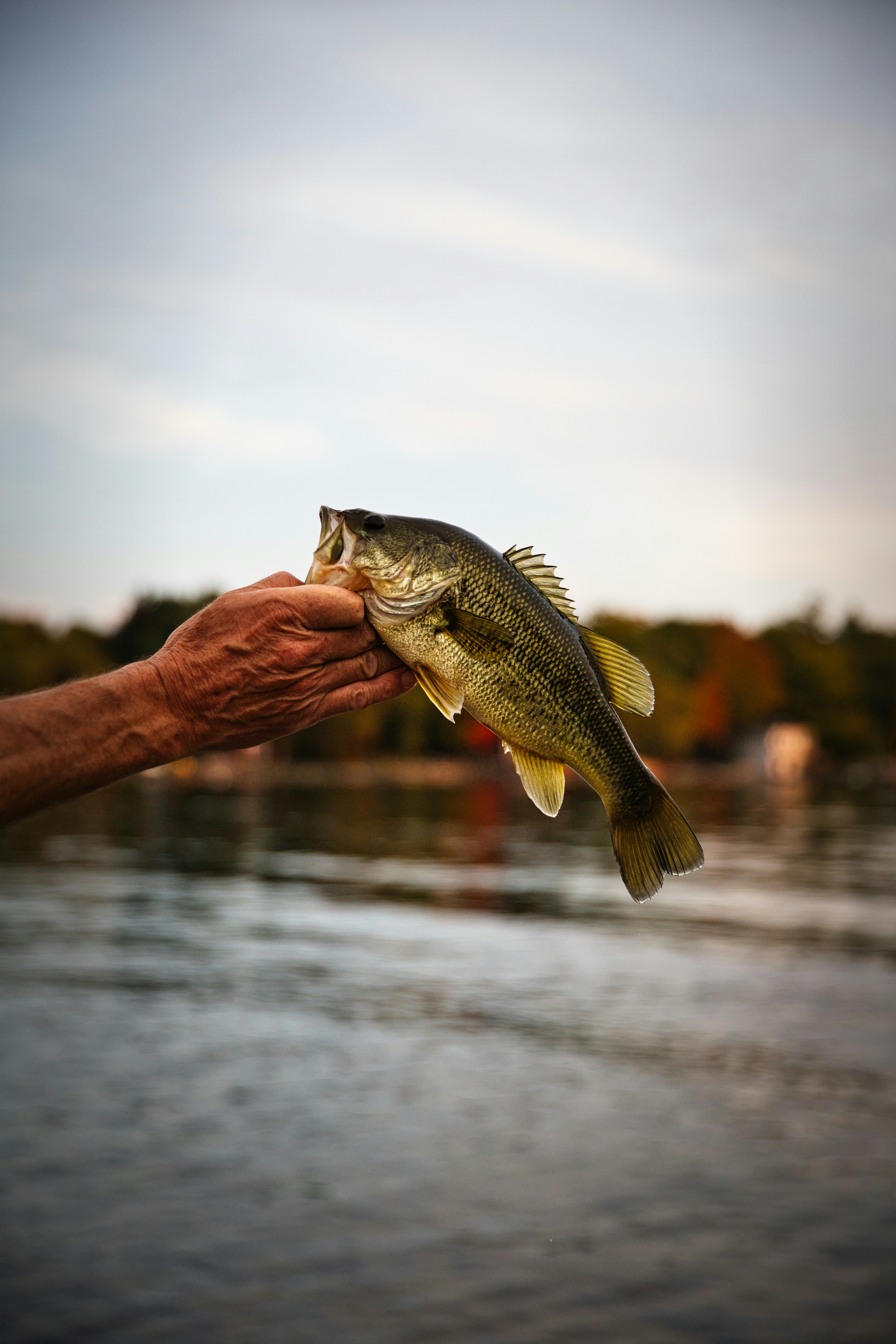
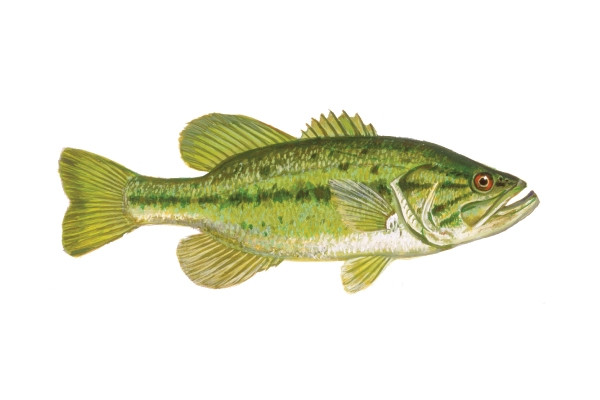
Largemouth Bass (Micropterus salmoides)
The most widely distributed and commonly caught bass species in the world. Largemouth are identified by their large mouth — the upper jaw extends beyond the rear of the eye — and the distinctive dark lateral stripe along their flanks.
Habitat: Largemouth prefer warm, slow-moving or still water with abundant vegetation. Weed beds, lily pads, fallen timber, dock pilings, and shallow bays are classic largemouth habitat. They tolerate water temperatures up to around 30°C (86°F) and thrive in conditions that would stress trout.
Behaviour: Ambush predators. Largemouth lie in or near cover, waiting for prey to come within striking distance. They're less likely than smallmouth to chase flies across open water — presentation near structure is key.
Size: Commonly 1–3kg in most fisheries; trophy fish over 5kg are possible in productive waters. The fly-caught largemouth world record stands at over 4.5kg.
Best fly fishing approach: Surface flies (poppers, frogs, deer hair bugs) near structure. Slow, deliberate presentations that give the fish time to react.
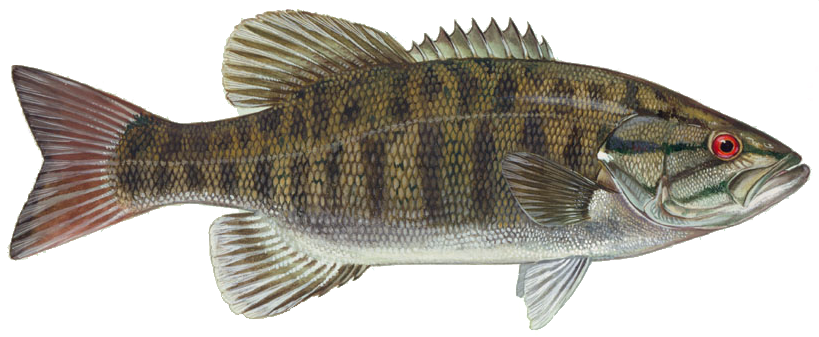
Smallmouth Bass (Micropterus dolomieu)
Native to eastern North America, smallmouth bass have been widely introduced and are considered by many fly anglers to be pound-for-pound the finest freshwater gamefish in the world. The upper jaw doesn't extend beyond the rear of the eye — hence "smallmouth" — and their flanks show vertical barring rather than a horizontal stripe.
Habitat: Smallmouth prefer cleaner, cooler, faster water than largemouth — rocky rivers, clear lakes with gravel and rock bottom, and streams with good current. They're found at lower temperatures than largemouth, tolerating conditions closer to trout habitat.
Behaviour: More aggressive and more willing to chase than largemouth. Smallmouth will pursue flies across open water, hit streamers stripped fast, and rise to surface flies in ways that largemouth rarely do. They're highly active, fight extremely hard for their size, and are considered by many to be more challenging and rewarding to target than largemouth.
Size: Typically smaller than largemouth in the same fishery — 0.5–2kg is the norm, with fish over 3kg considered exceptional.
Best fly fishing approach: Streamers, crayfish patterns, and surface flies in rivers and rocky lakes. More active retrieves than largemouth. Excellent dry fly and popper fishing during feeding activity.
Key Differences at a Glance
| Largemouth | Smallmouth | |
|---|---|---|
| Preferred habitat | Warm, weedy still water | Cool, rocky rivers and lakes |
| Water temperature | Up to 30°C | Prefers below 24°C |
| Feeding style | Ambush from cover | Active pursuit |
| Best flies | Poppers, frogs, slow streamers | Crayfish, streamers, surface flies |
| Fighting style | Powerful, uses structure | Acrobatic, open-water runs |
| Typical size | 1–3kg | 0.5–2kg |
Bass Habitat: Where They Live
Largemouth Habitat
Weed beds and lily pads: The archetypal largemouth environment. Bass lie in the shade of lily pads and the edges of weed beds, ambushing prey. Cast a frog pattern onto the pad and twitch it to the edge — the explosion when a bass takes it is unforgettable.
Fallen timber and structure: Submerged logs, fallen trees, and dock pilings create shade and ambush points. Bass tuck tight against structure — your fly needs to land close, not nearby.
Shallow bays and flats: In spring especially, largemouth move onto shallow flats to spawn and feed. Sight fishing to bass on flats is some of the most exciting freshwater fishing available — you're sight-casting to individual fish in clear, shallow water.
Deep water structure: In midsummer heat, large fish retreat to deeper water near drop-offs, submerged points, and humps. Less accessible on the fly but worth targeting with sinking lines in the right conditions.
Smallmouth Habitat
Rocky rivers: The quintessential smallmouth environment. Smallmouth hold behind boulders, in current seams, at pool heads and tails — much like trout. Reading a smallmouth river uses the same skills as reading a trout stream.
Rocky lake shorelines: Smallmouth in lakes favour rocky, hard-bottomed shorelines over sandy or muddy bottoms. Points, rocky headlands, and boulder fields are prime locations.
Gravel bars and riffles: Smallmouth feed actively over gravel in moving water, particularly when crayfish and hellgrammites are present.
Reading Bass Water
Reading water for bass uses similar principles to trout — fish hold where they can access food with minimal energy expenditure — but bass are more structure-oriented and less current-dependent than trout.
Key Bass Lies
The shade line: Bass are ambush predators that use shade. The shadow line created by a dock, an overhanging tree, or a weed bed edge is where bass position themselves to attack prey moving from light into shadow. Present your fly at — or just past — the shade line and retrieve it back through.
The weed edge: Bass don't typically sit in the middle of a weed bed — they sit on the edge, where open water meets cover. This is the most consistently productive zone in weedy still water.
Points and structure transitions: Where one type of habitat meets another — rocky bottom meeting sand, a weed bed ending, a submerged point extending into open water — bass concentrate. These transitions create ambush opportunities.
Current seams (rivers): In rivers, smallmouth use current seams exactly as trout do — the line between fast and slow water where food collects. Work the downstream edges of boulders, the tails of pools, and the heads of runs. The same water-reading skills that apply to trout fishing transfer directly — see our guide to reading a river for a full breakdown.
Depth transitions: The drop from shallow to deep water — a submerged ledge, the edge of a flat — concentrates bass, particularly in warmer months when fish move between feeding areas and thermal refuge.
Approaching Bass Water
Bass are less easily spooked than trout but still react to heavy footsteps, boat noise, and shadows over shallow water. In clear, shallow water — spawning flats, lily pad areas — approach quietly and avoid casting your shadow over fish. In deeper or coloured water, approach is less critical.
Gear for Bass Fly Fishing
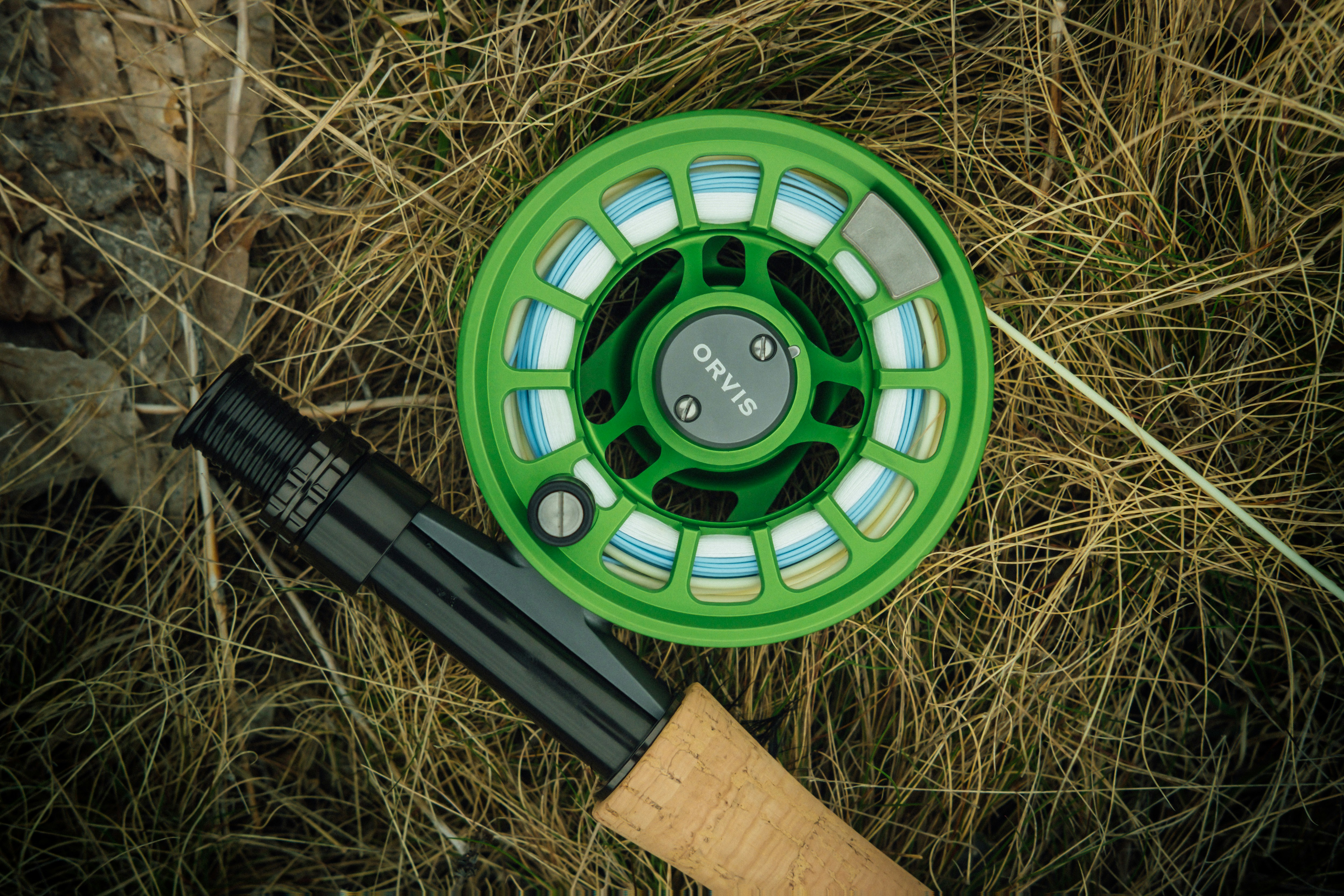
Rod
A 7 or 8-weight rod is the standard for bass fly fishing. The extra power compared to a trout rod handles larger, wind-resistant flies and gives you the backbone to pull fish out of heavy cover. For a full breakdown of fly fishing gear, see our Complete Fly Fishing Gear Guide.
- 7-weight: ideal for smaller bass flies, lighter poppers, and smallmouth in rivers. More fun on smaller fish.
- 8-weight: the all-round bass rod. Handles large poppers, deer hair bugs, and most largemouth situations. Also works for light saltwater.
- 9-weight: worth considering if you're primarily fishing large surface flies or very weedy water where you need power to stop fish.
Rod length: 9 feet is standard. Some bass anglers prefer 8.5 feet for better accuracy in tight, structure-heavy fishing.
Reel
A reel with a smooth disc drag and adequate line capacity. Bass fishing doesn't require the precision drag of saltwater reels — a mid-range freshwater reel is perfectly adequate. Ensure it holds your fly line plus at least 50m of backing.
Fly Lines
Floating line: The most versatile choice for bass. Handles surface flies, shallow streamers, and most warmwater situations. A weight-forward floating line in 7 or 8-weight covers the majority of bass fishing.
Intermediate line: Useful for fishing streamers just below the surface in stillwater, or for getting flies down slightly in rivers without a full sinking line.
Sink tip: For deeper presentations in summer when fish have retreated to depth, or for fishing large streamers in fast river water.
Bass-specific taper lines: Several line manufacturers (RIO, Scientific Anglers) make lines with aggressive tapers specifically designed to turn over large, wind-resistant bass flies. Worth the investment if you fish heavy poppers and deer hair bugs regularly.
Leader and Tippet
Bass leaders are shorter and heavier than trout leaders. A 7.5ft tapered leader tapering to 10–15lb is the standard starting point. Bass aren't leader-shy — the priority is strength and turnover of large flies, not invisibility. For a deeper dive on leaders and tippet, see our Essential Guide to Tippets and Leaders.
Use nylon mono tippet rather than fluorocarbon for surface fly fishing — nylon floats, which helps keep poppers and surface flies fishing correctly. Switch to fluorocarbon for subsurface presentations.
For largemouth in heavy cover: don't be afraid of 20lb tippet. You need to be able to stop fish before they reach a snag — light tippet costs you fish in weedy or timber-heavy water.
Essential Bass Flies
Surface Flies
Foam Poppers: The classic bass fly. A foam or cork body with a cupped face that creates a popping, gurgling sound when stripped. The noise and surface disturbance trigger aggressive strikes from largemouth. Available in endless colours — chartreuse/white, black, and natural frog colours are the essentials.
Best for: largemouth in warm, still water. Early morning and evening. Near structure.
Deer Hair Bass Bugs: Hand-spun deer hair bugs — poppers, sliders, and frog imitations — are the most beautiful and most effective bass surface flies. They float high, create excellent surface disturbance, and are irresistible to large bass. Harder to cast than foam poppers due to wind resistance, but worth mastering.
Best for: large largemouth, lily pad and weed edge fishing, low light conditions.
Foam Frog Patterns: Weedless frog imitations designed to be cast onto lily pads and retrieved across them without snagging. When a bass crashes a frog pattern off a pad it's one of fly fishing's most dramatic strikes. Rig weedless with a hook point riding up.
Best for: lily pad fishing, heavily weeded water, largemouth.
Surface Sliders: Unlike poppers, sliders have a pointed or rounded nose that creates a quieter, sliding surface disturbance rather than a loud pop. More subtle than poppers — useful when fish are surface feeding but spooky, or in clear water where the pop is too aggressive.
Best for: calmer conditions, clear water, smallmouth.
Streamers
Woolly Bugger: The universal bass fly. Black and olive are the essentials. Strip it fast for an aggressive baitfish action; slow it down for a wounded prey presentation. Bass eat Woolly Buggers in every water type and condition. If you carry nothing else, carry Woolly Buggers. Learn to tie your own with our complete Woolly Bugger tying guide.
Best for: all bass species, all conditions, subsurface searching.
Clouser Minnow: A weighted baitfish imitation with dumbbell eyes that give it a jigging, up-and-down action on the retrieve. Devastatingly effective for smallmouth in rivers and largemouth in open water. White/chartreuse and white/olive are the essential colours.
Best for: smallmouth in rivers, largemouth in open water, deeper presentations.
Crayfish Patterns: Crayfish are one of the most important food sources for bass — particularly smallmouth. A well-tied crayfish pattern crawled along the bottom near rocky structure is extremely effective. Natural orange/brown colours work best.
Best for: smallmouth in rocky rivers, largemouth near hard bottom structure.
Deceiver: A classic baitfish imitation with a flowing feather tail and sparse bucktail head. Large Deceivers in white and natural colours imitate shad and other baitfish that bass prey on.
Best for: largemouth targeting larger baitfish, open water searching.
Bass Fly Fishing Techniques
Popper Fishing
Cast the popper to your target — as close to structure as possible — and let it sit. The rings from the landing often draw fish. Then strip the line sharply to create the popping sound, pause, strip again. The pause is as important as the pop — bass often take on the pause when the fly is sitting still.
Strip-pause rhythm: experiment with the timing. Sometimes a fast, aggressive pop-pop-pop triggers immediate strikes. Other times a long pause between pops — ten to fifteen seconds — is what the fish want. Let the fish tell you.
Target the edges: cast as close to structure as you can. A popper that lands 50cm from a lily pad is far less effective than one that lands right at the edge. Accuracy matters more than distance.
Streamer Fishing for Bass
The strip retrieve: the standard bass streamer technique. Cast, let the fly sink briefly, then retrieve with strips — vary length and speed until you find what triggers fish. Short, fast strips for aggressive reaction strikes; long, slow strips for a more natural baitfish action. For a deeper dive on streamer technique, see our guide to streamer fishing.
The jigging retrieve: with weighted flies like the Clouser Minnow, a strip-pause retrieve creates a jigging action — the fly dives on the strip and rises on the pause. Deadly for smallmouth over hard bottom.
Dead drifting in rivers: in current, allow the streamer to dead drift like a nymph. This imitates a stunned or dying baitfish and often takes fish that won't chase an actively retrieved fly.
Sight Fishing for Bass
In clear, shallow water — spawning flats, lily pad areas, rocky shallows — bass can often be spotted before casting. Sight fishing to individual bass is one of the most rewarding forms of bass fly fishing.
The approach: move slowly and quietly. Polarised sunglasses are essential for cutting glare and seeing fish. Look for shadows on the bottom, movement, or the distinctive outline of a bass holding near structure.
The presentation: cast beyond the fish and retrieve the fly past its nose. Don't cast directly at the fish — the line landing overhead will spook it. Aim to land the fly 1–2 metres beyond and to the side of the fish and bring it into the strike zone.
Night Fishing for Largemouth
Large largemouth are predominantly nocturnal feeders. Fishing surface flies after dark — particularly on warm summer nights — produces some of the biggest bass of the year. Dark-coloured flies (black is the classic) create a strong silhouette against the night sky. Fish slowly and listen for the strike rather than watching for it.
Seasonal Bass Fishing Guide
Spring (Pre-Spawn and Spawn)
Spring is the most productive season for largemouth fly fishing. As water temperatures rise through 15–20°C, bass move into the shallows to spawn. Fish are aggressive, visible, and accessible. Sight fishing opportunities peak during the spawn as bass hold on visible nests in clear, shallow water.
Key tactics: surface flies and shallow streamers on spawning flats; sight casting to individual fish; poppers near emerging weed growth.
Note: many anglers choose not to target bass actively on the nest during spawning to avoid disrupting reproduction. Check local regulations and consider the ethics of your approach.
Summer
Summer offers excellent surface fly fishing during low-light periods — dawn, dusk, and after dark. Midday heat pushes fish deeper and into heavy shade. Smallmouth in rivers are more active through summer than largemouth in stillwater, as river currents keep water cooler and oxygenated.
Key tactics: surface flies in early morning and evening; streamers near shade and deep structure during the day; smallmouth rivers in the heat of summer when stillwater largemouth are less active.
Autumn
Autumn is the second-best season for bass fly fishing. Water temperatures drop back into the prime feeding range, bass feed aggressively before winter, and larger fish are more active. Baitfish are abundant and bass are actively hunting them — streamers come into their own.
Key tactics: large streamers imitating baitfish; faster, more aggressive retrieves; cover more water to find feeding fish.
Winter
Bass are cold-blooded and become lethargic as water temperatures drop below 10°C. Feeding slows dramatically and fish retreat to the deepest, warmest available water. Fly fishing in winter is slow but not impossible — a large streamer retrieved very slowly near deep structure can produce fish, particularly on warmer afternoons.
Key tactics: slow, deep presentations with weighted flies; target the warmest, deepest available water; afternoon sessions when temperatures peak.
🎣 Track what triggers bass on your water. Bass behaviour is highly seasonal and location-specific. Logging your sessions on Flyloops — flies used, water temperature, time of day, catch results — builds a personalised picture of when and where bass feed on your home water. Start your free logbook →
Bass Behaviour and Feeding
Understanding how bass think helps you catch more of them.
The Ambush Predator Mindset
Bass are not roaming, actively hunting predators in the way that a trevally or a pike might be. They're ambush predators — they find a position with good cover and visibility, and they wait. This means locating the right structure is more important than covering water quickly. Find the right piece of structure and work it thoroughly before moving on.
The Reaction Strike
One of the most important concepts in bass fishing is the reaction strike — a take triggered not by hunger but by instinct. A fly that moves suddenly, changes direction, or appears to be fleeing will trigger a strike from a bass that has no intention of eating. Fast, erratic retrieves exploit this. A bass that ignores a slow, natural presentation will sometimes smash an aggressively stripped fly immediately after.
Feeding Windows
Bass feed most actively during low-light periods — dawn, dusk, and overcast days. In summer, the best feeding window is often the first two hours of daylight before temperatures rise. In spring and autumn, fish may feed throughout the day. Midday in summer, particularly in still, warm water, is generally the poorest time.
Water Temperature and Bass Feeding
Water temperature is the single most useful variable to track for bass fishing. For a deeper understanding of how temperature affects fish behaviour across species, see our guide to water temperature and fly fishing.
| Water Temperature | Bass Activity |
|---|---|
| Below 10°C (50°F) | Very slow, deep water, minimal feeding |
| 10–15°C (50–60°F) | Increasing activity, beginning to move shallower |
| 15–22°C (60–72°F) | Prime feeding range, most active |
| 22–28°C (72–82°F) | Active but seeking shade and cooler water |
| Above 28°C (82°F) | Heat stress, reduced activity, deep water |
Catch and Release for Bass
Bass are robust fish that handle catch-and-release well compared to more delicate species like trout. That said, good handling practices ensure fish are released in the best possible condition. For a full guide to catch-and-release technique, see our Mastering Catch and Release article.
The lip grip: bass can be safely held vertically by the lower lip — their jaw is strong enough to support their weight and the lip grip is unlikely to cause injury. Keep the fish horizontal if holding it out of the water for more than a few seconds.
Minimise air exposure: aim for under 30 seconds out of water for photos and unhooking. Bass tolerate air exposure better than trout but still benefit from quick, careful handling.
Barbless hooks: crimping the barb makes unhooking faster and less damaging, particularly for fish taken deep on streamers.
Hot weather: in very warm water (above 28°C), bass are already heat-stressed. Minimise handling and ensure the fish is fully revived before release.
In weedy water: if a bass has taken the fly deep and is difficult to unhook near heavy cover, bring it to open water before attempting to unhook. Trying to remove a fly while the fish thrashes near a snag risks injury to the fish and losing it.
Frequently Asked Questions
Is fly fishing for bass difficult? Bass are one of the most forgiving fly fishing targets — they're less selective than trout and more aggressive than most species. Perfect presentation isn't required. If you can cast reasonably accurately and retrieve a fly with some variation, you'll catch bass. They're an excellent starting point for beginners and a refreshing change of pace for experienced trout anglers.
What fly rod weight is best for bass? A 7 or 8-weight is the standard for most bass fly fishing. A 7-weight is more fun on smaller fish and better for smallmouth in rivers; an 8-weight handles larger flies and gives more authority in heavy cover. If you already own a 6-weight trout rod, it will work for smaller bass in open water.
What is the best bass fly? The foam popper for surface fishing and the Woolly Bugger for subsurface are the two flies that cover the most situations. A black Woolly Bugger in size 6 and a chartreuse foam popper are the two flies to start with.
When is the best time to fly fish for bass? Early morning and evening year-round; spring for spawning largemouth in the shallows; autumn for aggressive pre-winter feeding. Avoid midday in midsummer when water temperatures peak and fish are less active.
Can I use my trout fly rod for bass? A 5 or 6-weight trout rod will catch bass in open water with smaller flies. It will struggle with large, wind-resistant bass flies (poppers, deer hair bugs) and won't give you enough backbone to pull fish from heavy cover. A 7 or 8-weight is a worthwhile upgrade if bass fishing becomes a regular pursuit.
What's the difference between largemouth and smallmouth bass fly fishing? Largemouth are ambush predators in warm, weedy still water — surface flies near structure, slow presentations, heavy cover. Smallmouth are more aggressive and active, preferring cool, rocky rivers and lakes — streamers, crayfish patterns, faster retrieves, river reading skills similar to trout fishing. Both are excellent on the fly but require slightly different approaches.
Do bass eat dry flies? Yes — surface flies are some of the most effective bass patterns. Poppers, foam bugs, deer hair flies, and large attractor dry flies all work. Bass are enthusiastic surface feeders, particularly in low light conditions and warm weather.
How do I find bass in a new lake or dam? Start with structure: weed beds, fallen timber, dock pilings, points, and depth transitions. In spring, look for fish in the shallows; in summer, focus on shade and deeper structure during the day, shallows in low light. Walk the shoreline with polarised glasses before fishing and look for fish holding in the shallows before committing to a spot. Logging your sessions on Flyloops builds a picture of productive locations over time — see our guide to keeping a fly fishing logbook for more on how to make the most of your fishing data.
Ready to start logging your bass sessions? Track flies, conditions, and catch data on Flyloops — free on web, iOS, and Android.