Fly Fishing for Carp: The Complete Guide
Estimated read time: 14 minutes
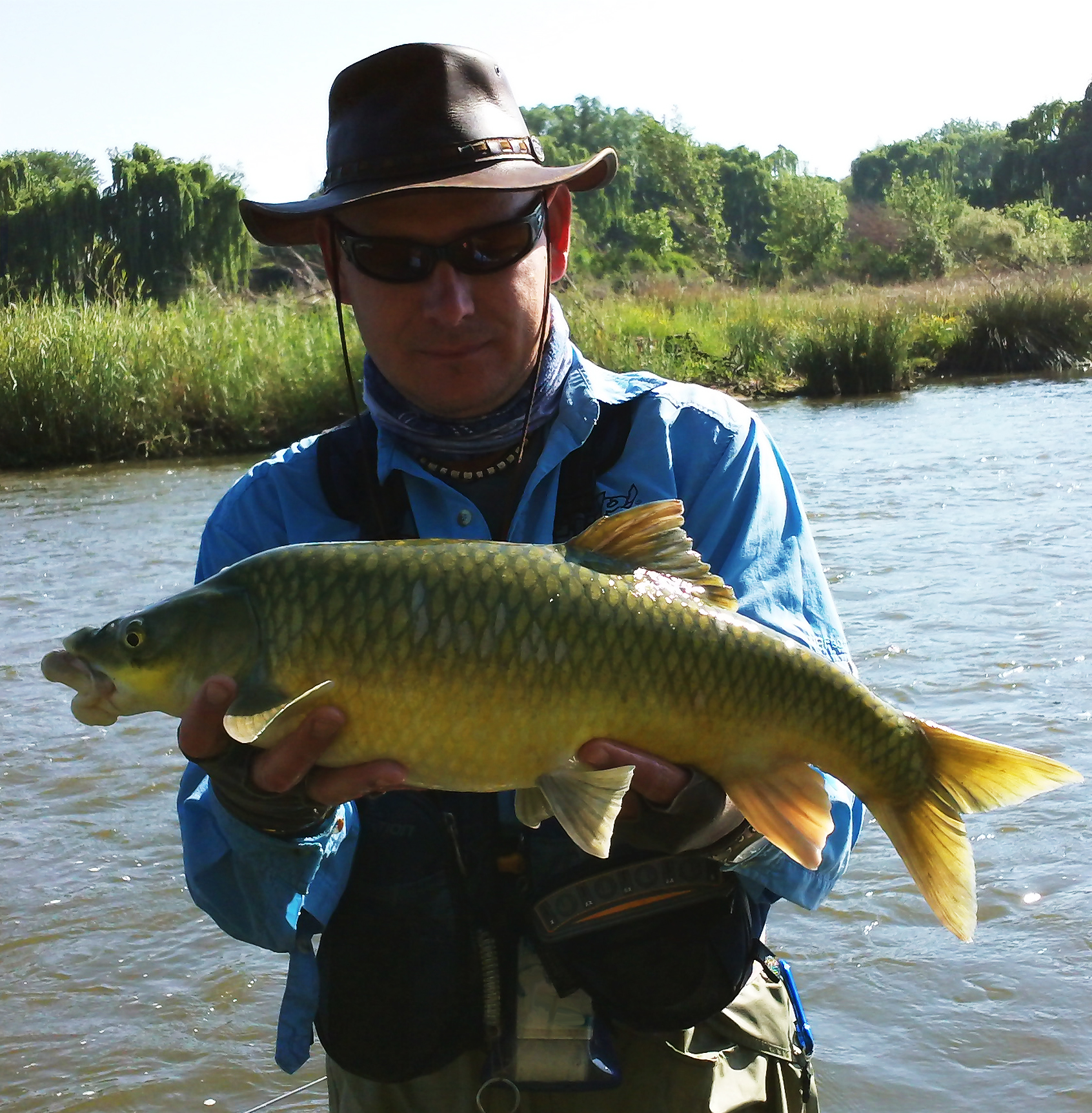
Carp are the most underrated fly fishing target in the world. They're everywhere — lakes, rivers, dams, canals, and slow-moving water on every inhabited continent. They grow large, fight extraordinarily hard, and in clear water they're among the most challenging and demanding fish to fool on a fly. Yet most fly anglers walk straight past them.
The perception problem is real. Carp have a reputation as a coarse fish — bottom-feeders associated with murky water and bait fishing. That reputation bears almost no resemblance to the reality of fly fishing for carp in clear water. A large common carp tailing on a gravel flat, feeding with the selectivity of a spring creek trout, is one of freshwater fly fishing's most demanding and rewarding targets. The term "grey ghost" — used by dedicated carp fly anglers to describe the difficulty of approaching and presenting to these fish — is entirely earned.
This guide covers everything: carp species, habitat, gear, flies, techniques, and how to approach one of fly fishing's most challenging and satisfying disciplines.
Table of Contents
- Why Fly Fish for Carp?
- Carp Species for the Fly Angler
- Carp Habitat: Where They Live
- Reading Carp Water
- Gear for Carp Fly Fishing
- Essential Carp Flies
- Carp Fly Fishing Techniques
- Approach and Stealth
- Seasons and Best Times
- Handling and Release
- Frequently Asked Questions
Why Fly Fish for Carp?
Before getting into the how, it's worth addressing the why — because carp fly fishing requires a shift in perspective for most fly anglers.
They're genuinely difficult. Carp in clear water are as selective and spooky as any fish you'll encounter. They inspect flies carefully, refuse presentations that aren't right, and bolt at the slightest disturbance. Fooling a large carp consistently on a fly is a meaningful achievement that tests every skill you've developed.
They're powerful. A 5kg carp fights with a sustained power that few freshwater fish match. They don't jump — they run, and they run hard and long. The first run of a large carp on appropriate fly tackle is something you won't forget.
They're accessible. Carp are found in fishable populations on every continent. You don't need to travel to remote wilderness or pay for exclusive water. The carp fishing is likely within an hour of where you live.
They're large. Double-figure fish — carp over 10kg — are realistic targets on many public waters. A 10kg carp on a 7-weight rod is a significant encounter by any measure.
The sight fishing is extraordinary. Spotting a carp, stalking it carefully, making a precise cast, and watching it tip down and eat your fly — this is fly fishing at its most intimate and immediate. It's comparable to the best saltwater flats fishing in its demands and satisfaction.
Carp Species for the Fly Angler
Several carp species are relevant to fly anglers worldwide. Understanding their differences helps you target them more effectively.

Common Carp (Cyprinus carpio)
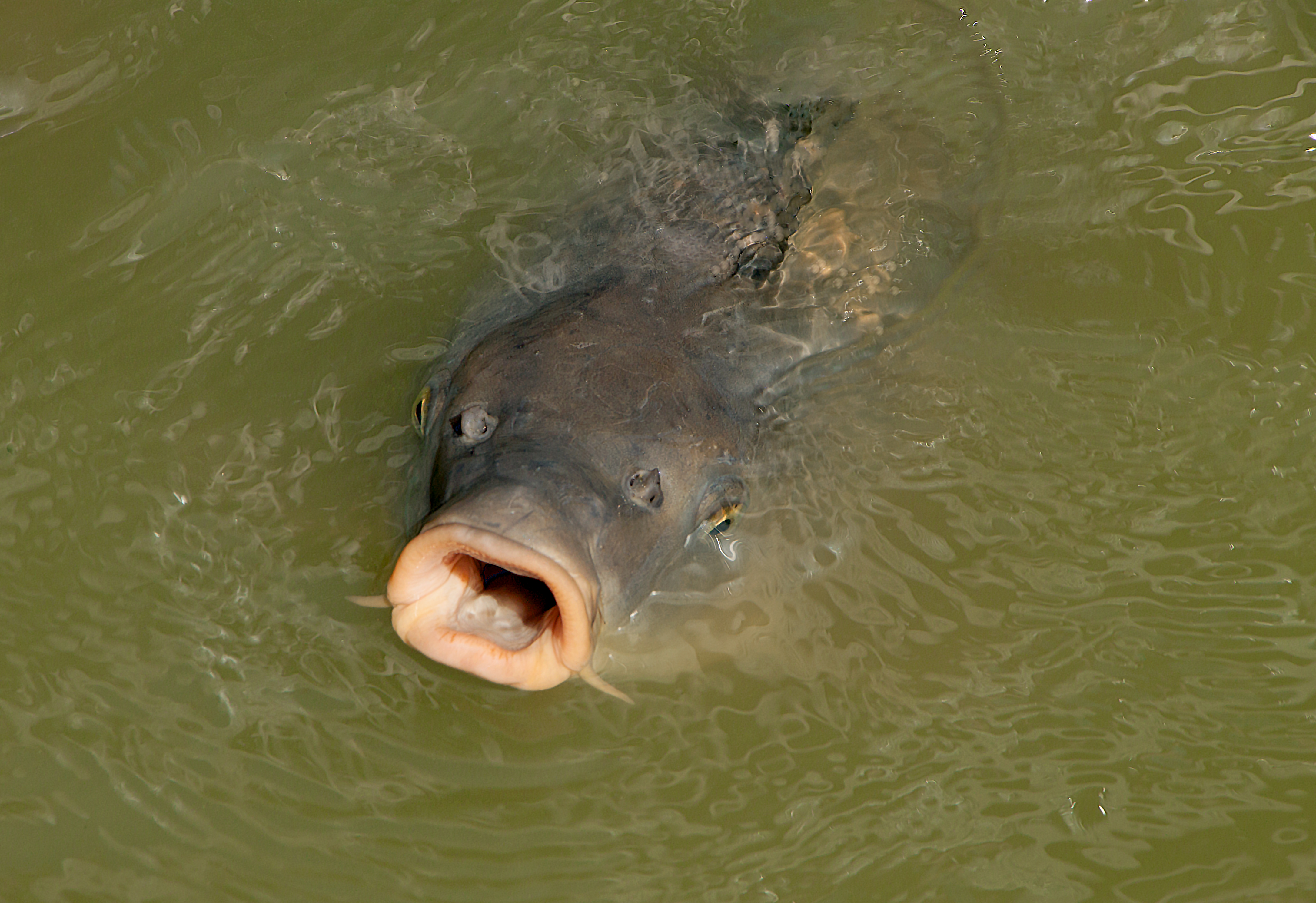
The most widely distributed and most commonly targeted carp species for fly fishing. Native to Asia and eastern Europe, common carp have been introduced to freshwater systems worldwide and are now found on every inhabited continent. The definitive carp fly fishing target.
Appearance: olive-brown to golden flanks, large scales, distinctive barbels at the corners of the mouth. A fully scaled fish with consistent scale pattern throughout.
Behaviour: highly adaptable, feeding on a wide range of food items — invertebrates, crustaceans, plant material, and small fish. In clear water they're selective and wary. In coloured water they feed more opportunistically. They're primarily bottom feeders but will feed at all depths when food is available at the surface or in the water column.
Size: commonly 2–8kg in most accessible fisheries. Fish over 10kg are present in productive waters. The fly rod world record exceeds 20kg.
Fly fishing character: the benchmark carp fly fishing experience. Demanding, powerful, and deeply satisfying.
Mirror Carp (Cyprinus carpio)
Mirror carp are a selectively bred variant of the common carp rather than a separate species — they have irregular, large mirror-like scales scattered across the body rather than the full scale coverage of a common carp. Some mirror carp have very few scales (linear mirrors) or almost none (leather carp).
Behaviour: identical to common carp — same habitat preferences, same feeding behaviour, same demands on the fly angler. Mirror carp are often larger on average than commons in the same fishery due to selective breeding for growth.
Fly fishing character: no meaningful difference from common carp in fly fishing terms. A large mirror carp is as demanding and as satisfying to catch as a large common.
Grass Carp (Ctenopharyngodon idella)
Originally from eastern Asia, grass carp have been widely introduced worldwide, primarily as a biological control for aquatic vegetation. They're a distinct species from common and mirror carp — longer, more streamlined, with smaller scales and a more pointed head.
Behaviour: primarily herbivorous — they eat aquatic vegetation and plant material rather than invertebrates. This makes them challenging to target on conventional invertebrate imitations. The most consistent approach is surface fishing with floating plant imitations — mulberry flies, floating foam patterns — or sight fishing with nymphs presented very close to actively feeding fish.
Size: commonly 3–10kg; fish over 15kg are present in some waters.
Fly fishing character: arguably the most challenging carp to catch consistently on a fly. Their herbivorous diet means most standard carp flies are ineffective. Successful grass carp fly fishing requires specific patterns and a patient, observant approach.
Crucian Carp (Carassius carassius)
A smaller, rounder carp species native to Europe and Asia, now widely distributed. Crucians rarely exceed 2kg in most fisheries — smaller than common carp but excellent sport on lighter tackle (3–5 weight). They respond well to nymphs and small dry flies in shallow water.
Fly fishing character: a light tackle carp fly fishing experience. Less demanding than commons but excellent fun on appropriate gear. Often found in smaller ponds and lakes where they're the dominant species.
Bighead and Silver Carp (Hypophthalmichthys nobilis / molitrix)
Invasive Asian carp species present in North American river systems and some other locations. Filter feeders that consume plankton rather than invertebrates — essentially impossible to catch on conventional flies. Occasionally hooked accidentally. Not a target species for fly fishing.
Carp Habitat: Where They Live
Carp are among the most habitat-tolerant freshwater fish. They thrive in conditions that would stress or kill more sensitive species — warm water, low oxygen, high turbidity. This adaptability is why they're found everywhere.
Still Water
Lakes, dams, reservoirs, and ponds are the most productive carp fly fishing environments. Still water allows carp to develop predictable patrol routes and feeding behaviours that the patient angler can learn and exploit.
Shallow margins: carp feed extensively in the shallow margins of lakes and dams, particularly in early morning and evening. Gravel and sand margins, weed bed edges, and areas with natural food concentrations draw fish into the shallows where they're accessible on the fly.
Gravel flats: one of the premier carp fly fishing environments. Clean gravel or sandy flats in 30–90cm of water, with good visibility — carp tailing here are visible, approachable, and targetable with sight fishing techniques.
Weed beds: dense aquatic vegetation harbours invertebrates and provides cover. Carp root through weed beds actively, disturbing the bottom and creating mudding clouds that betray their location.
Rivers and Streams
River carp are often overlooked but highly rewarding. They tend to be stronger fighters than stillwater fish — conditioned by constant current — and often more wary.
Eddy pools and slacks: carp in rivers hold in the slower water adjacent to the main current — behind boulders, in river bends, in the tails of pools. They feed in these calmer zones rather than fighting the main current.
Gravel bars: river carp feed actively on exposed gravel bars, particularly in low, clear water. Sight fishing to tailing carp on river gravel is exceptional fly fishing.
Margins and bank edges: overhanging vegetation drops terrestrial food into the water. Carp cruise bank edges in rivers exactly as they do in stillwater.
Urban and Canal Fishing
Canals and urban waterways often hold substantial carp populations that receive little fly fishing attention. Urban carp can be highly educated — they've seen a lot of bait but little fly fishing — and respond surprisingly well to well-presented flies. Urban canal carp fishing is accessible, often productive, and genuinely underexplored territory for fly anglers.
Reading Carp Water
Carp are visible fish in the right conditions. Learning to spot and interpret their behaviour from the bank is the foundation of consistent carp fly fishing.
Signs of Feeding Carp
Tailing: the most exciting sign — carp feeding head-down on the bottom with their tails breaking the surface or clearly visible in shallow water. Tailing fish are actively feeding and the best targets for fly presentation.
Mudding: carp rooting in soft bottom substrate disturb silt and sediment, creating visible brown or cloudy patches in otherwise clear water. Mudding fish are feeding actively. Present your fly at the edge of the mudding cloud where the fish are working.
Bubbling: carp feeding on the bottom release gases trapped in the sediment, creating strings of bubbles rising to the surface. A useful sign in slightly coloured water where tailing isn't visible.
Rolling: carp rolling at the surface — often early morning and evening — aren't always actively feeding but indicate fish location. Worth watching to determine if a feeding pattern develops.
Nervous water: subtle surface disturbance created by fish moving just below the surface. In flat calm conditions, a patch of disturbed water indicates carp presence.
Patrol Routes
In stillwater, carp develop regular patrol routes — paths they travel consistently in search of food. Observing a water over multiple sessions reveals these routes. Positioning yourself on a known patrol route and presenting a fly ahead of approaching fish is one of the most effective carp fly fishing strategies.
Gear for Carp Fly Fishing
Rod
A 9ft 7 or 8-weight is the standard carp fly rod — powerful enough to handle large fish in weedy water, capable of turning over larger flies, and with enough backbone to apply pressure during long fights.
7-weight: the lighter end of the carp range. Better for smaller fish, lighter flies, and open water where you don't need to stop a fish quickly. More fun on average-sized carp.
8-weight: the all-round choice. Handles large flies, stronger wind, and gives you authority with bigger fish in weedy or snaggy water. The recommended starting point for carp fly fishing.
Some experienced carp fly anglers use 5 or 6-weight rods specifically for the challenge — it's entirely possible on open water with careful fish management. Not recommended for beginners.
Reel
A reel with a smooth, reliable disc drag and adequate backing capacity. Carp make long, powerful runs — particularly the first run when they first feel the hook. A reel with 150m+ of backing is advisable. The drag should be set light enough to give line freely on the first run but firm enough to tire the fish.
Fly Line
Floating line: the primary carp fly line. Covers sight fishing, shallow water, and most everyday carp situations. A weight-forward floating line in 7 or 8-weight handles the majority of carp fishing.
Intermediate line: useful for presenting flies slightly below the surface in deeper water, or when fish are holding at mid-depth rather than on the bottom.
Sink tip: for presenting flies right on the bottom in deeper water — deep pools, channels, and areas where carp are feeding below effective reach of a floating line.
Leader and Tippet
Leader length: a longer leader (10–12ft) helps with the delicate presentation required for clear-water carp. Shorter leaders (7.5ft) are adequate in coloured water or when distance and turnover of heavier flies matters more than delicacy.
Tippet strength: carp require stronger tippet than most trout fishing. 3X (8lb) to 1X (12lb) fluorocarbon is the standard range. Go lighter (4X) only in very clear water with particularly wary fish — the risk of breakoff on a running carp increases significantly. Fluorocarbon is strongly preferred over nylon — it's less visible underwater and more abrasion-resistant against the carp's leathery mouth.
A note on tippet strength: many experienced carp fly anglers use heavier tippet than feels comfortable — 10–15lb fluorocarbon. The logic is sound: a large carp that reaches a weed bed or snag with light tippet will almost always break off. Heavier tippet gives you a chance to stop the fish before it reaches safety.
Essential Carp Flies
Carp flies fall into three broad categories: bottom-crawling imitations, mid-water patterns, and surface flies. The most consistent carp fly fishing happens with the first category — flies that sink to the bottom and sit or crawl naturally in front of a feeding fish.
Bottom Flies
Carp Claw / Crayfish patterns: crayfish are one of the most important food items for carp in waters where they're present. A well-tied crayfish imitation — weighted to sink quickly and crawl along the bottom — is one of the most consistently effective carp flies available. Tie or buy them in natural olive, brown, and orange.
San Juan Worm: simple, effective, and often overlooked by serious carp fly anglers who consider it too basic. In practice, a red or pink San Juan Worm presented to a tailing carp produces strikes in almost any fishery. Don't ignore it.
Clouser Minnow (small): tied small (size 6–10) and fished on the bottom, the Clouser's dumbbell eyes orient the hook point upward — less likely to snag in weeds and bottom debris. Effective for carp actively feeding on small fish and invertebrates.
Backstabber: a purpose-designed carp fly with a foam body, rubber legs, and a hook that rides point-up to reduce snagging. One of the most popular and widely effective carp patterns in North America, increasingly used worldwide.
Hare's Ear Nymph (heavy): a heavy beadhead Hare's Ear in size 8–12 sinks quickly and sits naturally on the bottom. Carp eat nymphs readily in clear water. The impressionistic Hare's Ear profile suggests a range of invertebrates that carp feed on.
Mid-Water Flies
Damselfly Nymph: carp feed heavily on damselfly nymphs in productive still waters. A large damselfly nymph pattern retrieved slowly through open water intercepts cruising fish between bottom-feeding bouts.
Woolly Bugger: stripped slowly through mid-water or along the bottom, the Woolly Bugger's pulsing marabou tail triggers carp that ignore more precise imitations. Effective in slightly coloured water where reaction strikes are more likely.
Surface Flies
Mulberry Fly: where mulberry trees overhang the water, carp key in on falling mulberries with extraordinary selectivity. A floating foam mulberry imitation drifted under a mulberry tree in season is one of the most exciting and reliable carp surface presentations. Highly specific but absolutely deadly where applicable.
Floating foam patterns (beetles, ants): terrestrial insects that fall onto the water surface trigger surface feeding. Foam beetle and ant patterns presented quietly to surface-feeding carp produce confident takes.
Bread Fly: a floating foam pattern imitating the white bread that people feed ducks and fish on public waters. Controversial among purists but devastatingly effective on educated park lake carp.
Carp Fly Fishing Techniques
Sight Fishing: The Core Technique
Sight fishing — spotting individual carp and presenting a fly directly to them — is the primary technique in clear-water carp fly fishing. It requires patience, observation, and precise casting, but it's also the most satisfying and consistently productive approach.
The sequence:
- Spot the fish — polarised glasses are essential
- Assess its behaviour — tailing, cruising, stationary
- Plan your approach — position to cast without spooking the fish
- Make the cast — land the fly ahead of the fish, close enough to be noticed but not on top of it
- Watch the fish's reaction — does it turn toward the fly, speed up, or ignore it?
- Strike — when the fish tips down and the leader tightens, or when you see the white of the mouth closing
The cast placement: for a tailing fish, place the fly 30–60cm in front of the fish's nose in the direction it's facing. For a cruising fish, cast 1–2 metres ahead of its travel direction and let it come to the fly. Never cast directly on top of a carp — it spooks immediately.
The Induced Take
When a carp approaches a stationary bottom fly but seems to be ignoring it, a subtle lift of the rod tip — raising the fly slightly off the bottom — often triggers an immediate strike. The movement suggests a fleeing invertebrate, triggering the predatory reflex. This is one of the most reliable techniques for converting follows and inspections into takes.
Blind Fishing
In coloured or murky water where sight fishing isn't possible, blind fishing to likely areas — mudding patches, weed bed edges, feeding zones — produces fish. Cast to likely holding areas, allow the fly to sink to the bottom, and retrieve with slow, short strips. Takes in coloured water tend to be more aggressive and less selective than in clear water.
Surface Fishing
When carp are visibly feeding on the surface — taking floating insects, mulberries, or other surface food — surface presentation becomes the right approach. Present the fly quietly beyond the feeding fish and drift or twitch it into the feeding zone. Carp surface takes are confident and visible — one of fly fishing's most exciting moments.
Approach and Stealth
Approach is everything in clear-water carp fly fishing. Carp in clear, shallow water are acutely aware of shadows, vibrations, and movement. More presentations are ruined by poor approach than by poor fly selection.
Move slowly. Every footstep on a hard bank or in shallow water sends vibrations through the substrate. Move in slow motion when within range of fish.
Stay low. Carp react strongly to silhouettes above the waterline. Crouch when approaching fish in shallow water. Kneel if necessary.
Use the sun. Position yourself with the sun at your back or to the side — it improves your visibility into the water and puts your shadow away from the fish.
Polarised glasses are non-negotiable. You cannot sight fish for carp without polarised lenses. They're as important as your rod in this kind of fishing.
Don't wade unnecessarily. Wading creates vibrations and disturbs bottom sediment. Bank fishing or very careful wading is almost always preferable for carp.
Watch before you cast. Spend several minutes observing a fish before making a cast. Understanding its feeding direction, movement pattern, and behaviour produces a better first cast — and the first cast to any carp is almost always the best chance.
Seasons and Best Times
Spring
Spring is prime carp fly fishing time. As water temperatures rise above 12°C, carp become active after winter. Pre-spawn fish move into the shallows and feed aggressively. The combination of warming water, increasing food availability, and fish moving into accessible shallow areas makes spring the best overall season.
Key tactics: sight fishing on shallow margins and gravel flats; crayfish and nymph patterns near the bottom; early morning and evening surface activity.
Summer
Summer offers the best surface fishing of the year — warm temperatures mean carp feed actively near the surface. Mulberry fishing peaks in early to midsummer. Midday heat pushes fish into shade and deeper water; morning and evening are most productive for shallow sight fishing.
Key tactics: surface flies during mulberry season; early morning sight fishing on shallow flats; evening feeding on margins.
Autumn
Carp feed hard in autumn before winter, building fat reserves. Feeding activity is sustained and fish are less selective than in summer. Larger, deeper presentations become more effective as fish move toward deeper water.
Key tactics: nymphs and bottom patterns in deeper water; early season before water cools significantly; longer, more patient sessions as fish become more cautious.
Winter
Cold water (below 10°C) makes carp largely inactive. They hold in deep water and feed minimally. Winter carp fly fishing is very slow and not recommended for most anglers. In warmer climates where water temperatures remain above 12°C year-round, carp are catchable throughout winter.
🎣 Log your carp sessions. Carp behaviour is highly location and season-specific. Logging water temperature, fly selection, feeding behaviour observed, and catch data on Flyloops builds a detailed picture of your local carp water over time — invaluable for a species that rewards accumulated knowledge above all else. Start your free logbook →
Handling and Release
Carp are robust fish but deserve careful handling — particularly large fish that have been fought hard.
Use a large net: a proper carp landing net with a soft, rubberised mesh is essential for fish over 3kg. Trying to beach or lip-grip a large carp risks injury to both fish and angler.
Keep them in the water: unhook in the net in the water where possible. For photographs, lift briefly and return immediately. Large carp are heavy and their internal organs can be stressed by extended time out of water.
Wet your hands and any surface: dry hands and hard surfaces remove the protective slime coat. Always wet your hands before handling and use a wet unhooking mat if lifting the fish onto a surface.
Support the weight: hold large carp horizontally with both hands supporting the belly. Never hold large fish vertically — the weight stresses the spine and internal organs.
Revive before release: hold the fish upright in the water, facing into any available current, until it swims away strongly under its own power. Large carp fought hard in warm water may need several minutes to recover.
Barbless hooks: strongly recommended. Carp have tough, leathery mouths that make barbed hooks difficult to remove without causing damage. Barbless hooks are faster to remove and cause significantly less injury.
Frequently Asked Questions
Is fly fishing for carp difficult? Clear-water sight fishing for carp is genuinely demanding — as challenging as any freshwater fly fishing. Carp in clear water are selective, wary, and powerful. Coloured-water blind fishing is more forgiving — less technical but still rewarding. Overall, carp fly fishing ranges from beginner-accessible (pond carp on worms) to among the most technically demanding freshwater fly fishing available (sight fishing clear-water commons). Most anglers find the right entry point somewhere in the middle.
What fly rod do I need for carp? A 9ft 7 or 8-weight is the standard recommendation. The 8-weight gives more authority with large fish and handles larger flies in wind more comfortably. If you already own a 6-weight trout rod, you can start with that on smaller, open-water fish — but for serious carp fly fishing, a 7 or 8-weight is the right tool.
What is the best fly for carp? In clear water with tailing fish: a small crayfish pattern or San Juan Worm presented close to the fish's nose. In coloured water: a San Juan Worm or small Woolly Bugger fished near the bottom. On the surface: a foam mulberry or beetle pattern during surface feeding. The San Juan Worm is the single most universally effective carp fly — simple, available everywhere, and consistently productive across water types and conditions.
Why are carp called the "grey ghost"? The nickname reflects the difficulty of approaching and presenting to carp in clear water. Despite their large size, carp in clear shallow water are extraordinarily wary — they spook at shadows, footsteps, and poorly placed casts, and then seem to vanish. Their ability to disappear despite being large fish in shallow, clear water earns them the grey ghost reputation.
What tippet should I use for carp? 3X to 1X fluorocarbon — 8–12lb — for most carp fly fishing. Go lighter (4X) only in very clear water with highly selective fish. Heavier tippet (10–15lb) is worth considering in weedy or snaggy water where you need to stop a running fish before it reaches cover. Fluorocarbon is strongly preferred over nylon for its reduced visibility and better abrasion resistance.
Do carp eat dry flies? Yes — carp are willing surface feeders when food is available on top. Mulberries, terrestrial insects, floating plant material, and bread all trigger surface feeding. A foam mulberry fly under a mulberry tree, a floating beetle pattern near grassy banks, or a bread fly on park lake carp — all produce exciting, visible surface takes. Surface fishing is less consistent than bottom fishing overall but produces some of the most memorable carp fly fishing moments.
Can I catch carp on nymphs? Yes. Standard trout nymphs — Hare's Ear, Pheasant Tail, beadhead patterns in size 8–14 — work well on carp in clear water. The key is presenting the nymph on or very close to the bottom in front of a feeding or approaching fish. Carp eat nymphs confidently in clear water and a tight-line strike on a carp nymph take is a distinctive, satisfying experience.
Targeting carp on the fly? Log your sessions on Flyloops — track water temperature, fly selection, feeding behaviour and catch data to build a personalised guide to your local carp water over time.