Yellowfish on the Fly: The Complete Guide
Estimated read time: 15 minutes
There is no freshwater fly fishing experience quite like a yellowfish. Endemic to the river systems of southern Africa, found nowhere else on earth, yellowfish are powerful, wild, and deeply connected to some of the continent's most spectacular landscapes. A large smallmouth yellow rising to a dry fly on the Vaal, or a largemouth yellow stripping line on the Orange River — these are moments that stay with you.
Yet yellowfish remain largely unknown outside South Africa. International fly fishing media barely covers them. Online resources are thin. Most of what gets passed between anglers happens in person, on the river, in the way that local knowledge always travels. This guide aims to change that — a comprehensive, practical resource for anyone wanting to target yellowfish on the fly, whether you're a local angler discovering the species for the first time or a visiting fly fisher planning a trip.
Table of Contents
- What Are Yellowfish?
- Yellowfish Species
- Yellowfish Habitat
- Reading Yellowfish Water
- Gear for Yellowfish Fly Fishing
- Fly Selection for Yellowfish
- Yellowfish Fly Fishing Techniques
- Seasons and Best Times
- Where to Find Yellowfish
- Regulations and Conservation
- Handling and Release
- Frequently Asked Questions
What Are Yellowfish?
Yellowfish belong to the family Cyprinidae — the same family as carp, barbel, and minnows — making them technically large freshwater cyprinids rather than true game fish in the salmonid sense. But don't let that fool you. Yellowfish fight with a power and endurance that humbles trout anglers, rise to dry flies with the selectivity of spring creek browns, and inhabit river systems of extraordinary beauty.
They are South Africa's indigenous answer to the trout — a wild, native fish that has evolved over millions of years in the rivers of the subcontinent. Unlike trout, which were introduced to South Africa in the late 1800s, yellowfish have been here since long before human settlement. They are the original fly fishing quarry of the region.
Several characteristics make yellowfish uniquely challenging and rewarding on the fly:
They are powerful. Pound for pound, yellowfish are among the strongest freshwater fish in southern Africa. A 3kg smallmouth yellow in fast water will test your tackle and your nerve in a way that a trout of the same size rarely does.
They can be selective. Particularly in clear, low water, yellowfish — especially smallmouth — inspect flies carefully and refuse presentations that don't look right. They respond to matching natural food items, correct presentation, and appropriate tippet weights.
They rise to dry flies. One of the most exciting aspects of yellowfish fly fishing is their willingness to feed on the surface. Watching a large yellowfish tip up to take a dry fly in the surface film is an experience that rivals anything in freshwater fly fishing.
They are wild. There are no stocked yellowfish. Every fish you catch has lived its entire life in the river, feeding on natural food, navigating floods and droughts. This wildness gives the fishing an authenticity and meaning that stocked fisheries can't replicate.
Yellowfish Species
South Africa has several yellowfish species, each with distinct characteristics, habitat preferences, and fly fishing approaches.
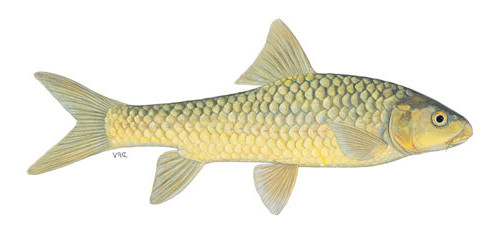
Smallmouth Yellowfish (Labeobarbus aeneus)
The most widely distributed and accessible yellowfish for fly anglers. Smallmouth yellows are found throughout the Vaal and Orange River systems and their tributaries — the most productive and accessible yellowfish fly fishing in the country.
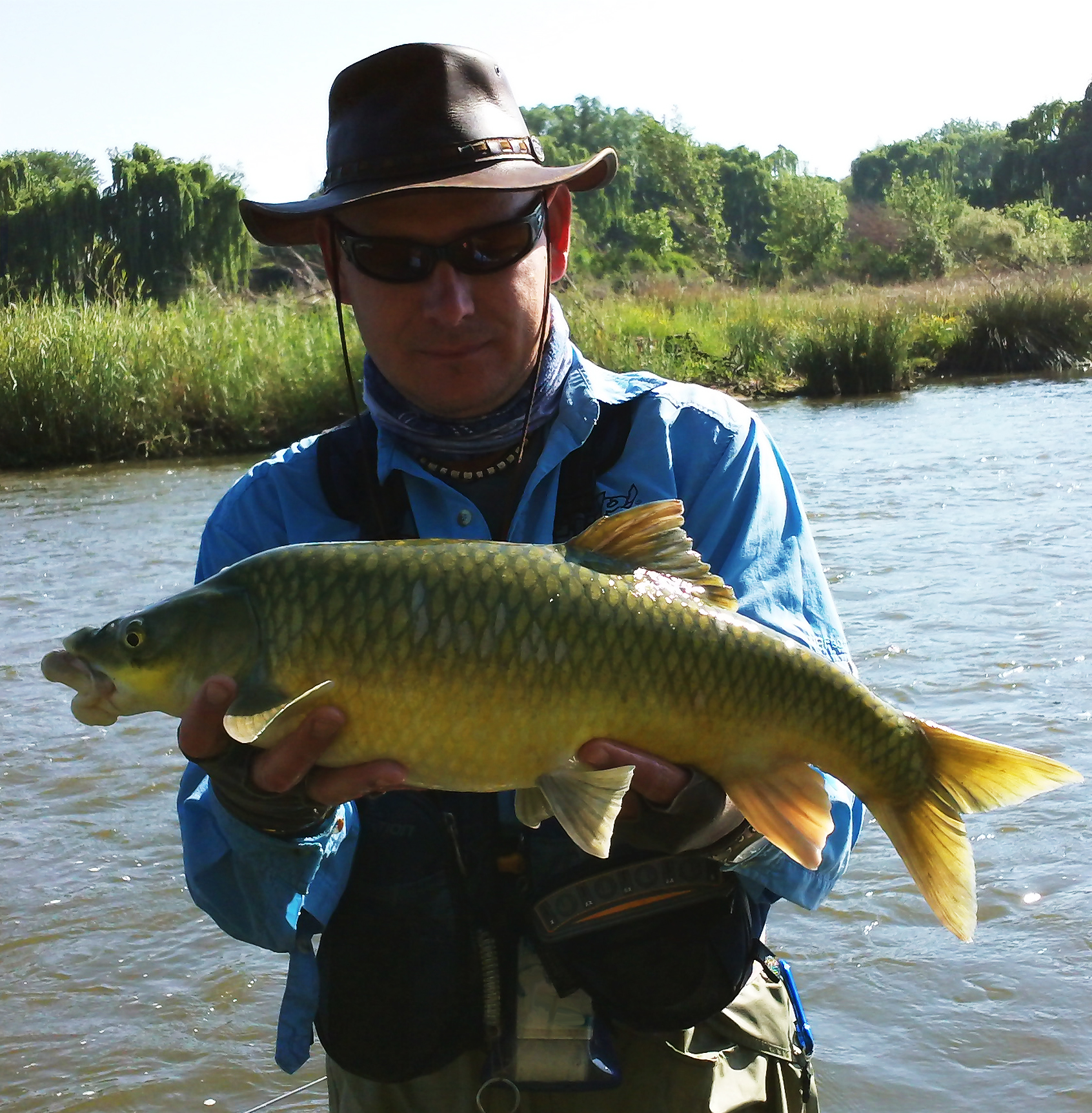
Appearance: streamlined body, yellowish-gold flanks, relatively small mouth. Adults typically 20–45cm, with fish over 50cm considered exceptional. Weight usually 0.5–2kg, with larger fish possible in productive systems.
Behaviour: active, aggressive feeders that respond well to both surface and subsurface presentations. More willing than largemouth to rise to dry flies and chase actively retrieved flies. Found in a variety of water types — riffles, runs, pool tails, and around structure.
Fly fishing character: the most approachable yellowfish for fly anglers. Their aggression and willingness to take dry flies makes them ideal for anglers new to the species. They fight hard for their size — much harder than a trout of equivalent weight.
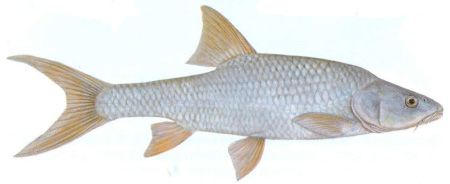
Largemouth Yellowfish (Labeobarbus kimberleyensis)
The trophy yellowfish. Larger, more powerful, and more challenging to catch on the fly than smallmouth. Found primarily in the lower Vaal and Orange River systems, largemouth yellows are a serious target for experienced fly anglers.
Appearance: similar body form to smallmouth but noticeably larger mouth, deeper body, more bronze colouration. Adults commonly 40–70cm; fish over 5kg are realistic targets in productive systems. The South African fly rod record stands over 10kg.
Behaviour: less aggressive on the surface than smallmouth — primarily a nymph and streamer fish, though they will rise to surface flies in the right conditions. Tend to hold in deeper, slower water than smallmouth. Wary in clear conditions.
Fly fishing character: the pinnacle of South African freshwater fly fishing. A large largemouth yellow on a fly rod is an extraordinary experience — powerful, sustained runs, deep fighting, and the satisfaction of fooling one of the river's most cautious predators.
Clanwilliam Yellowfish (Labeobarbus capensis)
Endemic to the Olifants River system in the Western Cape — one of the most geographically restricted yellowfish species. The Clanwilliam yellowfish is found only in the cold, clear mountain streams and rivers draining the Cederberg range, making it one of South Africa's most unique and precious fly fishing targets.
Appearance: similar to smallmouth yellowfish but adapted to the cooler, faster water of the Olifants system. Typically smaller than Vaal smallmouth — 20–40cm is the norm.
Behaviour: feeds actively on aquatic insects, particularly in riffles and runs. Responds well to nymphs and dry flies. Water temperatures in the Olifants system are cooler than the Vaal, meaning fishing techniques and timing are somewhat different.
Conservation note: the Clanwilliam yellowfish faces significant pressure from invasive species and habitat degradation. Catch-and-release is strongly encouraged and in many areas mandatory.
Natal Yellowfish (Labeobarbus natalensis)
Found in the river systems of KwaZulu-Natal — the Thukela (Tugela), uMgeni, and their tributaries. The Natal yellowfish is less well-known in fly fishing circles than the Vaal species but provides excellent sport in beautiful mountain river settings.
Appearance: golden-yellow flanks, medium-sized mouth, streamlined body. Adults typically 25–50cm.
Behaviour: similar to smallmouth yellowfish in feeding habits — surface feeding is possible, responds well to nymphs and smaller streamers. Found in faster, more oxygenated water in the upper reaches of KZN river systems.
Bushveld Yellowfish (Labeobarbus marequensis)
Found in the Limpopo River system and its tributaries in northern South Africa. Less commonly targeted by fly anglers but present in the right conditions.
Appearance: similar body form, typically 20–40cm in accessible fly fishing water.
Behaviour: warm-water species, more tolerant of higher temperatures than the Vaal species. Found in slower, warmer water than most other yellowfish. Responds to nymphs and streamers.
Yellowfish Habitat
Understanding where yellowfish live helps you find them — and understanding why they live there helps you catch them.
River Systems
Yellowfish are river fish. They require flowing water with good oxygenation, clean substrate, and sufficient depth. They're sensitive to pollution and sedimentation, making their presence a reliable indicator of good water quality.
Preferred habitat within rivers:
Riffles and runs: fast, shallow, oxygenated water over gravel and rock. Smallmouth yellowfish are frequently found in riffles during feeding periods — the turbulent water concentrates food and the broken surface disguises leader and tippet from wary fish.
Pool tails: the glassy, shallow section at the end of a pool where current accelerates. One of the most productive zones for surface-feeding yellowfish — fish here are visible, selective, and accessible to dry fly presentation.
Current seams: the boundary between fast and slow water, where food concentrates and fish can feed efficiently. The same water-reading skills that apply to trout translate directly to yellowfish.
Deep pools: large fish — particularly largemouth — hold in the deeper, slower sections of large pools during the heat of the day and in low-water conditions. Less accessible on the fly but worth targeting with heavy nymphs and streamers.
Behind structure: boulders, rock formations, and submerged logs create current breaks that yellowfish use as feeding stations. They hold in the calm water behind structure and move into the adjacent current to intercept food.
Water Quality and Temperature
Yellowfish are temperature-sensitive freshwater fish with a preferred feeding range of approximately 16–24°C. Below 12°C they become sluggish and largely stop feeding. Above 28°C they experience heat stress.
The Vaal River system, where most smallmouth yellowfish fly fishing happens, experiences significant seasonal temperature variation — cold winters that shut down feeding and hot summers that push fish into deeper, cooler water. The prime fishing windows are spring and autumn when water temperatures are in the ideal range.
Reading Yellowfish Water
The water-reading skills developed for trout transfer almost directly to yellowfish. Yellowfish balance the same three needs — food, energy conservation, and safety — and position themselves accordingly in the river.
Key Features to Target
Riffle-pool transitions: where fast riffle water slows and deepens into a pool. Food concentrates here and yellowfish stack up to intercept it. One of the most consistently productive zones on any yellowfish river.
Current seams in riffles: even within fast water, subtle current variations create feeding lanes. Yellowfish hold on the slower side of these seams, tipping into the fast water to take food drifting past.
Rock gardens and pocket water: complex boulder-studded sections create a multitude of current breaks and small pools. Each is a potential lie. Cover each pocket methodically before moving on.
Undercut banks and bank edges: particularly in the late afternoon when terrestrial insects fall from bankside vegetation. Large yellowfish use undercut banks for shelter and as ambush points for beetles, ants, and grasshoppers.
Shallow gravel bars: smallmouth yellowfish feed actively over shallow gravel, particularly during morning and evening feeding periods. Sight fishing to fish working gravel bars is some of the most exciting yellowfish fly fishing available.
→ See our Complete Guide to Reading Water for a full breakdown of river water-reading principles.
Gear for Yellowfish Fly Fishing
Rod
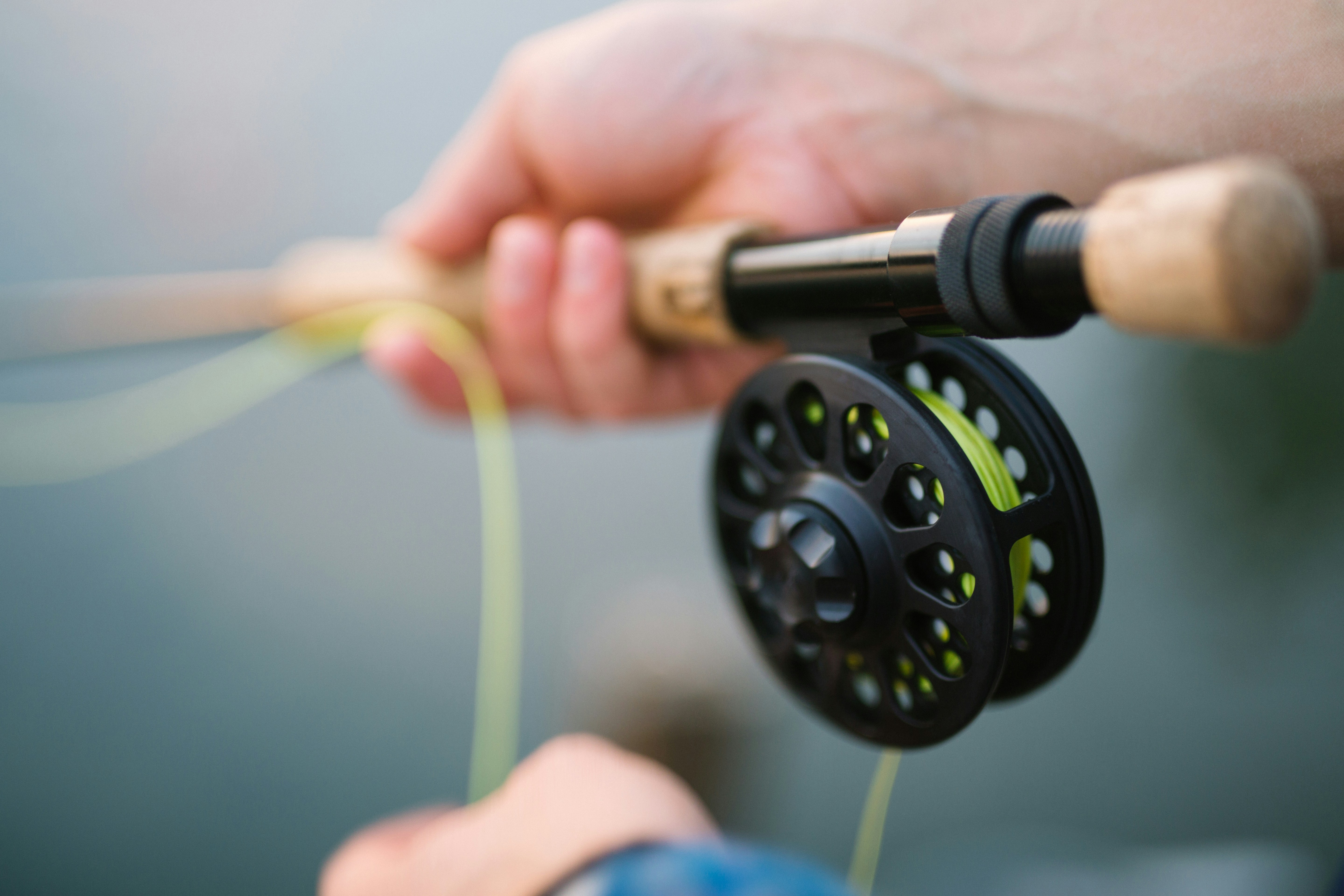
Smallmouth yellowfish: a 9ft 5 or 6-weight covers most smallmouth situations. A 5-weight handles dry fly and nymph fishing in average conditions; a 6-weight gives extra authority for streamer fishing and casting in wind. The extra power of a 6-weight is also useful when fish run hard in fast current.
Largemouth yellowfish: step up to a 9ft 7 or 8-weight. Largemouth fight harder and longer than smallmouth, and the larger rivers where they're found often require longer casts and heavier streamers. A 7-weight is the all-round choice; an 8-weight for dedicated largemouth fishing with large streamers.
Clanwilliam yellowfish: a 9ft 4 or 5-weight is ideal for the smaller, clearer streams of the Olifants system. Delicate presentation matters here.
Reel
A reel with a smooth, reliable disc drag and adequate backing capacity is important for yellowfish — particularly largemouth. A 3kg smallmouth in fast current will run hard. A 7kg largemouth will strip backing. Ensure your reel holds at least 100m of backing for smallmouth, 150m+ for largemouth.
Fly Lines
Floating line: the foundation of yellowfish fly fishing — covers dry fly, nymph, and lighter streamer work. A weight-forward floating line in the appropriate weight handles the majority of smallmouth situations.
Intermediate line: useful for swinging streamers and getting flies slightly deeper in slower water without the management issues of a full sinking line. Worth having on a spare spool for largemouth fishing.
Sink tip: for deep nymphing in the large pools of the Orange and lower Vaal, a sink tip line gets flies into the feeding zone faster than split shot alone. More useful for largemouth than smallmouth.
Leader and Tippet
Smallmouth: a standard 9ft tapered leader to 4X or 5X fluorocarbon tippet covers most situations. Drop to 6X for dry fly fishing in clear, low water on pressured fish. Go up to 3X for heavy streamers.
Largemouth: shorter, stronger leaders — 7.5ft to 3X or 4X fluorocarbon. Largemouth fight hard enough that light tippet costs fish. In heavy, snaggy water, don't be afraid of 2X.
Fluorocarbon throughout: yellowfish rivers are often clear. Fluorocarbon's reduced visibility underwater is a genuine advantage. Use it for tippet across all yellowfish applications.
Fly Selection for Yellowfish
Yellowfish eat what the river provides — aquatic insects in all life stages, terrestrials, small fish, crustaceans, and algae. The following flies cover the vast majority of situations.
Dry Flies
Elk Hair Caddis (size 12–16): caddisflies are abundant in most yellowfish rivers. The Elk Hair Caddis is the most reliable all-round surface fly for smallmouth yellowfish — buoyant, visible, and effective throughout the day during caddis activity.
Parachute Adams (size 14–18): the universal mayfly imitation works as well on yellowfish as on trout. During morning and evening feeding periods, a Parachute Adams presented to rising yellowfish on a pool tail is as demanding and rewarding as any dry fly fishing.
Foam Beetles and Ants (size 14–16): terrestrial insects — beetles, ants, grasshoppers — fall from bankside vegetation throughout summer and autumn. Yellowfish feed on them actively, particularly near undercut banks and overhanging vegetation. Foam beetle patterns are simple to tie and extremely effective.
Foam Hopper (size 10–14): grasshoppers in summer and early autumn represent a significant food source in open, grassy river valleys. A well-placed hopper pattern drifted along a grassy bank edge produces explosive takes.
Walker's Killer: a classic South African dry fly pattern that has accounted for enormous numbers of yellowfish over decades. If you're fishing yellowfish water in South Africa, carry Walker's Killers.
Nymphs
Hare's Ear (size 12–16): the most broadly effective nymph for yellowfish. Its rough, impressionistic profile imitates the range of aquatic invertebrates that form the bulk of yellowfish diet in most rivers. Fish it dead drift near the bottom in riffles and runs.
Pheasant Tail (size 14–18): excellent for selective smallmouth in clear water conditions where a slimmer, more precise nymph outperforms the bulkier Hare's Ear.
San Juan Worm (size 12–14): one of the most effective yellowfish nymphs available, particularly after rain when earthworms wash into the river. Tie it in red and pink. Many purists dislike it — it catches fish regardless.
Czech Nymphs and Heavy Beadheads: in deep, fast water — particularly on the main Vaal — heavy tungsten-beaded nymphs get into the feeding zone faster than lighter patterns. Czech-style nymphs in natural brown and olive are excellent for deep nymphing.
Algae Flies: yellowfish eat algae — specifically the filamentous green algae that coats rocks in most South African rivers. Simple algae fly patterns tied with green chenille or dubbing, fished dead drift near the bottom, are surprisingly effective and represent an often-overlooked food source.
Streamers
Woolly Bugger (size 6–10): black and olive are the essential colours. Strip it through deep pools and across current seams for both smallmouth and largemouth. The most versatile streamer for all yellowfish species.
Clouser Minnow (size 4–8): the jigging action of the dumbbell-eyed Clouser is deadly for largemouth yellowfish in deep water. White/chartreuse and white/olive are the standard colours.
Small Baitfish Patterns: largemouth yellowfish prey on smaller fish in larger river systems. A simple baitfish imitation in natural colours — white belly, olive or brown back — retrieved with long strips through deep pools produces the biggest fish.
Yellowfish Fly Fishing Techniques
Dry Fly Fishing
Dry fly fishing for yellowfish is most productive during morning and evening feeding periods and during active insect hatches. Approach is critical — yellowfish in clear, shallow water are easily spooked.
Upstream presentation: the standard approach. Position yourself downstream of feeding fish and cast upstream, allowing the fly to drift naturally back through the feeding lane. Yellowfish take dry flies confidently when the presentation is right — the take is visible, deliberate, and deeply satisfying.
Skating and twitching: unlike trout, yellowfish will often chase a moving surface fly. During caddis hatches particularly, a fly that's deliberately twitched or slightly dragged can outperform a dead drift. This is one area where the yellowfish's cyprinid aggression works in your favour.
Pool tail fishing: the glassy tail of a pool where current accelerates into the riffle below is prime dry fly water. Yellowfish station here during feeding periods, visible and accessible. Approach slowly from below, keep a low profile, and present carefully — these fish have seen everything.
Nymphing
Nymphing is the most consistently productive technique for yellowfish across all conditions and seasons. Fish spend the majority of their time feeding subsurface, and nymphs that drift naturally near the bottom produce fish when nothing else will.
Indicator nymphing: the most accessible approach. Set the indicator at 1.5 times the water depth and fish your nymph dead drift through riffles, runs, and current seams. Watch for any pause, twitch, or movement of the indicator — yellowfish strikes can be subtle.
Euro nymphing: tight-line nymphing without an indicator is extremely effective for yellowfish in the fast pocket water and riffles where smallmouth are most abundant. The direct connection allows detection of takes that an indicator would miss entirely.
Deep nymphing for largemouth: in the deep, slow pools of the lower Vaal and Orange, heavy nymphs on a sink tip line fished near the bottom produce largemouth that won't come up for surface presentations. Slow, deliberate drifts with occasional lifts.
Streamer Fishing
The swing: cast across and slightly downstream and allow the fly to swing across the current. Takes come throughout the swing and at the hang — the moment when the fly stops at the end of the swing and hangs stationary in the current. Particularly effective for largemouth in large, deep runs.
Strip retrieve: strip the streamer back with varying speed and rhythm. For largemouth in stillwater sections and deep pools, long, slow strips with extended pauses allow the fly to sink between retrieves. For smallmouth in fast water, shorter, faster strips trigger reaction strikes.
Sight fishing with streamers: in clear water where fish are visible, cast a small streamer directly to individual fish and retrieve it past their nose. The reaction strike from a yellowfish that spots a fleeing baitfish is immediate and violent.
Seasons and Best Times
Spring (September – November)
The best overall season for yellowfish fly fishing. Water temperatures rise through the prime feeding range of 16–22°C, winter floods have cleared, and fish feed aggressively after a lean winter. Early spring produces excellent nymphing; late spring brings the first significant surface activity as insects emerge and terrestrials become active.
Key tactics: nymphing in riffles and runs; watch for first dry fly opportunities from October onward; streamer fishing productive in slightly coloured early-season water.
Summer (December – February)
Summer produces the best dry fly fishing of the year — grasshoppers, beetles, and ants are abundant, caddis hatches are frequent, and yellowfish feed actively on the surface during cooler morning and evening periods. Midday heat pushes water temperatures up and reduces activity — fish early and late.
Key tactics: dry fly fishing in early morning and evening; terrestrial patterns near banks; nymphing in the shade of deep pools during the heat of the day.
Autumn (March – May)
The second prime season. Water temperatures remain warm enough for active feeding but the extreme summer heat has passed. Fish feed hard before the onset of winter. Late autumn often produces the best streamer fishing of the year as larger fish become aggressive.
Key tactics: dry fly and nymph through April; streamers increasingly effective in May; focus on deeper water as temperatures cool.
Winter (June – August)
The most difficult season. Water temperatures drop below the prime feeding range and yellowfish become sluggish. Feeding continues on warm afternoons when temperatures peak, but the fishing is generally slow. Not the recommended time for a dedicated yellowfish trip, though fish can be caught on heavy nymphs fished slowly near the bottom.
🎣 Log your yellowfish sessions. Water temperature, fly selection, location, and catch data logged consistently on Flyloops builds a detailed picture of your home water across seasons — invaluable for a species as temperature-sensitive as yellowfish. Start your free logbook →
Where to Find Yellowfish
Vaal River System
The heartland of South African yellowfish fly fishing. The Vaal River above the Barrage — particularly the stretch from Parys upstream through the rocky sections near Vredefort — holds excellent populations of smallmouth yellowfish and is accessible at numerous public points.
Key locations:
- The Vaal River near Parys — accessible, productive, classic smallmouth water
- The Wilge River (Vaal tributary) — excellent smallmouth fishing in a more intimate river setting
- The Vals River — another productive Vaal tributary with good access
- The upper Vaal near Standerton and upstream — less pressure, good fish
Orange River
The Orange River holds both smallmouth and largemouth yellowfish throughout its length, with the lower sections — particularly in the Northern Cape — producing the largest largemouth. Several outfitters run guided float trips that combine yellowfish fly fishing with multi-day river camping — one of South Africa's great fly fishing experiences.
Key locations:
- Augrabies Falls National Park area — spectacular scenery, good largemouth access
- The lower Orange River float trip (Noordoewer to Vioolsdrif) — multi-day float, excellent largemouth
- The upper Orange in the Eastern Cape highlands — smaller fish, beautiful mountain river setting
Olifants River (Western Cape)
The Clanwilliam yellowfish's home river. The Olifants system drains the Cederberg and offers unique, beautiful fishing for a species found nowhere else. Access requires careful research — much of the best water is on private land and some sections are in conservation areas with restricted access.
Key locations:
- The upper Olifants near Clanwilliam — core Clanwilliam yellowfish habitat
- Tributaries in the Cederberg — more remote, pristine conditions
KwaZulu-Natal Rivers
The Natal yellowfish of the Thukela and uMgeni systems is less well-known but worth seeking out — spectacular mountain river settings and wild, uncrowded fishing.
Key locations:
- The upper Thukela (Tugela) in the Drakensberg foothills
- The uMgeni above Howick
Regulations and Conservation
Licences
Freshwater fishing in South Africa requires a provincial licence. For the main yellowfish rivers:
- Vaal River (Gauteng/Free State): Gauteng Department of Agriculture and Rural Development or Free State licence depending on which bank you fish
- Orange River: Northern Cape licence for most accessible sections
- Olifants River: CapeNature licence for Western Cape waters
- KZN rivers: Ezemvelo KZN Wildlife licence
Licences are inexpensive and available online or at tackle shops. Always carry your licence on the water.
Bag Limits and Size Limits
Yellowfish bag and size limits vary by province and river. Many private waters and conservation areas operate on a strict catch-and-release basis. Check current provincial regulations before fishing — they change periodically and vary significantly between systems.
Conservation
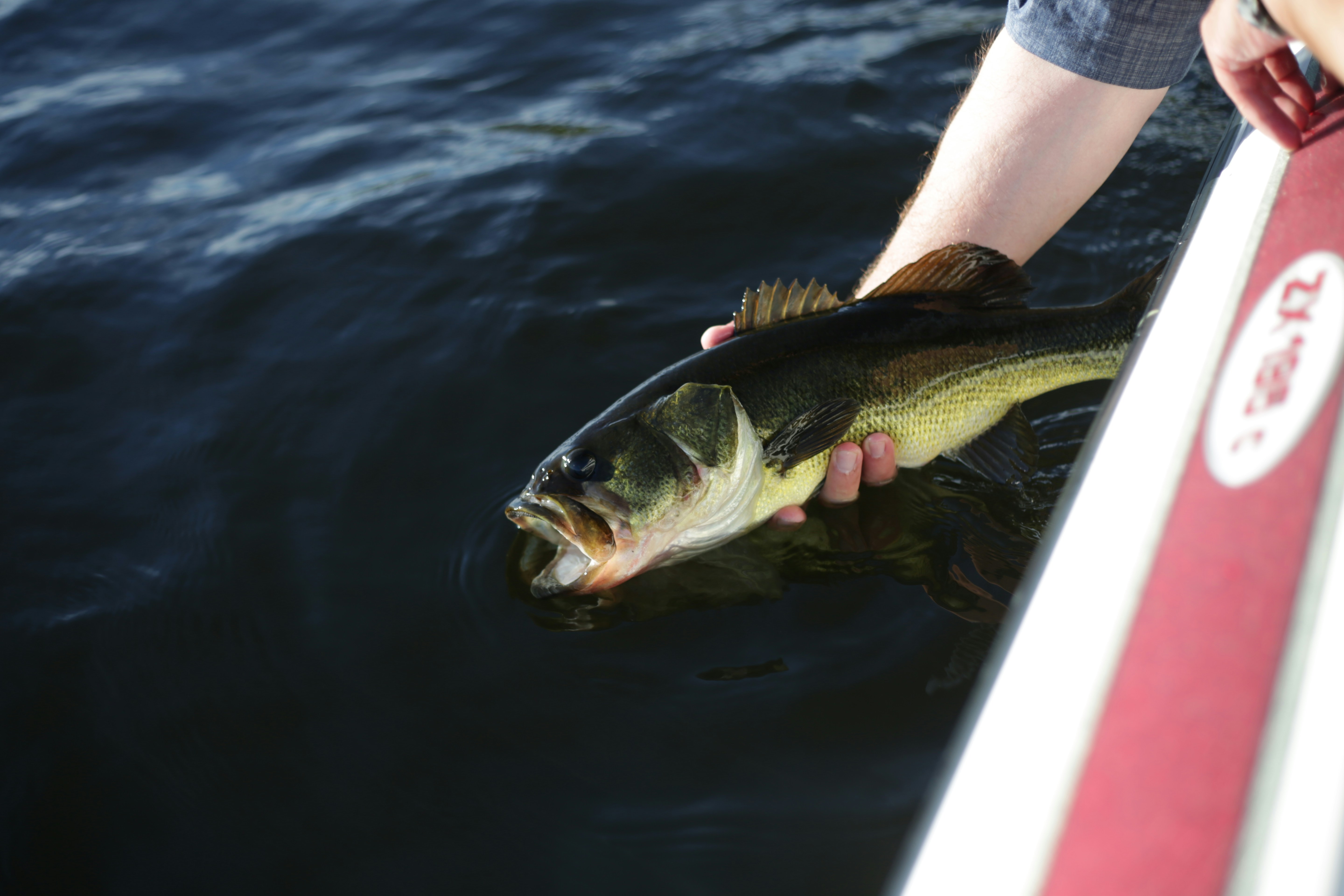
Yellowfish are under pressure in many of their native river systems from invasive species (particularly bass, bluegill, and trout in some systems), pollution, sedimentation, and water abstraction. Several species face genuine conservation challenges.
The fly fishing community has an important role to play:
- Practise catch-and-release — particularly for largemouth yellowfish which are slow-growing and vulnerable to overharvest
- Report invasive species sightings to CapeNature or relevant provincial authorities
- Support river conservation organisations working in yellowfish habitat
- Avoid disturbing spawning fish — spawning runs typically occur in spring; fish that are actively spawning should be left alone
Handling and Release
Yellowfish are robust fish but deserve careful handling — particularly in warm summer water when they're already under heat stress.
Keep them in the water: wherever possible, unhook and release without lifting the fish clear of the water. If photographs are needed, keep the fish wet and in the water until the moment of the shot, then return immediately.
Wet your hands: dry hands remove the protective mucus coat. Always wet your hands before handling any fish.
Support the fish properly: hold yellowfish horizontally, supporting the body. Don't hold them vertically by the lip — their body weight stresses the jaw and spine.
Revive before release: hold the fish gently in the current, facing upstream, until it kicks away under its own power. In warm water, this may take several minutes. Don't rush it.
Barbless hooks: strongly recommended. Barbless hooks are easier and faster to remove, causing less damage to the fish. Hook-up rates on barbless hooks are virtually identical to barbed hooks with a tight line.
→ See our guide to catch and release for full handling technique.
Frequently Asked Questions
What are yellowfish? Yellowfish are a group of large freshwater cyprinids (the carp family) endemic to the river systems of southern Africa. Several species exist, the most important for fly fishing being the smallmouth yellowfish and largemouth yellowfish of the Vaal and Orange River systems. They are South Africa's premier indigenous freshwater fly fishing target.
Are yellowfish good to eat? Yellowfish are edible but the fly fishing community strongly encourages catch-and-release given the conservation pressures facing several species. Most serious yellowfish anglers release everything they catch.
How big do yellowfish get? Smallmouth yellowfish typically reach 20–45cm and 0.5–2kg in most accessible waters. Largemouth yellowfish grow significantly larger — fish over 5kg are realistic targets and the fly rod record stands over 10kg. Clanwilliam and Natal yellowfish are generally smaller than Vaal species.
Is yellowfish fly fishing difficult? Smallmouth yellowfish are accessible to intermediate fly anglers — their aggression and willingness to take dry flies makes them approachable for anyone comfortable with basic casting and presentation. Largemouth yellowfish on the fly is more demanding — larger rivers, bigger flies, more powerful fish. Both are significantly more rewarding than stocked trout fishing.
What is the best time of year for yellowfish fly fishing? Spring (September–November) and autumn (March–May) are the prime seasons, when water temperatures are in the ideal 16–22°C feeding range. Summer produces the best dry fly fishing but midday heat reduces activity — fish early and late. Winter fishing is slow.
Do yellowfish rise to dry flies? Yes — one of the great pleasures of yellowfish fly fishing is their willingness to feed on the surface. Smallmouth yellowfish are particularly active surface feeders during caddis hatches, terrestrial falls, and general morning and evening feeding periods. Largemouth rise less frequently but will take surface flies in the right conditions.
What rod do I need for yellowfish? A 9ft 5 or 6-weight covers most smallmouth yellowfish situations. Step up to a 7 or 8-weight for largemouth or larger river fishing. See our Complete Fly Fishing Gear Guide for a full breakdown.
Where is the best place to fly fish for yellowfish in South Africa? The Vaal River near Parys is the most accessible and well-known destination for smallmouth yellowfish. The Orange River offers the best largemouth yellowfish fly fishing. The Olifants River in the Western Cape is the only place in the world to target Clanwilliam yellowfish. See our Complete Guide to Fly Fishing in South Africa for a full regional breakdown.
Can I fish for yellowfish without a guide? Yes — the Vaal River system in particular has good public access and is DIY-friendly with a provincial licence. The Orange River float trip is best done with an outfitter. The Olifants and KZN systems require more research into access arrangements. A local guide on unfamiliar water adds enormous value regardless of species.
Planning a yellowfish fly fishing trip? Log your sessions, track conditions, and build your knowledge of South Africa's most exciting freshwater fly fishing on Flyloops — built for South African anglers.