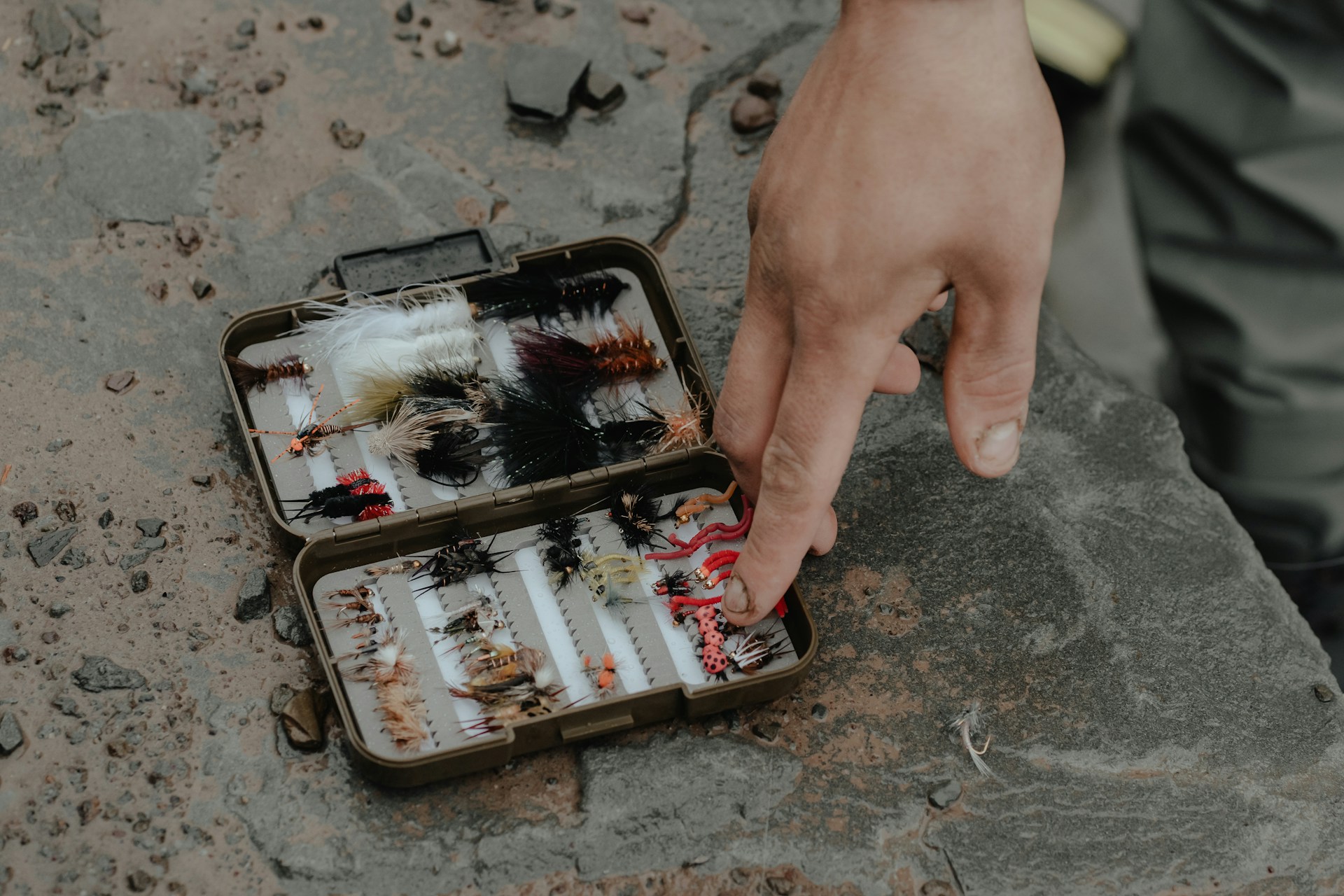
The Fly Fisher's Guide to Keeping a Logbook
Estimated read time: 11 minutes
Most fly anglers rely on memory. They fish a stretch of river, catch a few fish, note mentally that the Elk Hair Caddis worked in the afternoon, and drive home. Next season they return to the same water, can't quite remember what worked last time, and start from scratch.
It's an enormously inefficient way to improve — and almost everyone does it.
The anglers who consistently catch the most fish aren't necessarily the most talented casters or the deepest entomologists. They're the ones who pay attention and remember what they learned. A logbook is simply a system for doing that reliably, turning individual fishing sessions into a cumulative body of knowledge about your water, your technique, and your fishing.
This guide makes the case for why logging matters, what to actually record, and how to do it in a way that's useful rather than burdensome.
Table of Contents
- Why Most Anglers Don't Log — and Why They Should
- What a Logbook Actually Does for Your Fishing
- What to Log
- The Data That Matters Most
- Patterns You Can Only See Over Time
- Paper vs Digital Logbooks
- How to Build the Habit
- Using Your Data to Fish Smarter
- Frequently Asked Questions
Why Most Anglers Don't Log — and Why They Should
Ask an experienced fly angler why they don't keep a logbook and you'll usually get one of a few answers:
"I'll remember the important stuff." You won't — not reliably, not across seasons. Memory is selective, optimistic, and surprisingly bad at retaining the specific details that actually matter: the exact fly that worked, the water temperature, the time of day the rise started, the tippet weight that made the difference.
"It feels like homework." Fair. Logging shouldn't feel like a chore — and if it does, you're recording too much or making it too complicated. A good logging system takes two minutes at the end of a session.
"I just fish for enjoyment, not to analyse data." This one is worth examining. The enjoyment of fly fishing is deeply connected to improvement — the satisfaction of a difficult fish fooled, a technique mastered, a piece of water finally understood. Logging accelerates all of that. It doesn't make fishing less enjoyable; it makes it more so.
The real reason most anglers don't log is simply that no one ever told them it was worth doing, or showed them how to do it simply. That's what this guide is for.
What a Logbook Actually Does for Your Fishing
Before getting into the mechanics, it's worth being specific about what logging actually delivers — because the benefits are more concrete than "knowing more about your fishing."
It Turns Isolated Sessions Into a Pattern Library
A single fishing session tells you what worked on that day, in those conditions. Interesting, but limited. Ten sessions on the same water, logged consistently, start to reveal patterns: which flies produce in which conditions, which lies hold fish in low water vs high water, what time of day the rise typically starts in October vs February.
These patterns are invisible without records. With records, they become a personalised guide to your home water that no book or article can replicate — because it's specific to your river, your region, your fishing.
It Shortens the Learning Curve
Fly fishing has a reputation for taking years to learn. Part of that is genuine complexity. But a significant part is simply that most anglers repeat the same mistakes year after year because they have no record of having made them before.
Logging creates a feedback loop. You try something, record the result, and the next time you face a similar situation you have a reference point. Over a season of consistent logging, your rate of improvement accelerates noticeably.
It Makes You More Observant on the Water
There's a secondary benefit to logging that most people don't anticipate: the knowledge that you're going to record the session makes you pay more attention during it. You notice the water temperature, the weather, the rise forms, the flies you tried. The act of logging trains the habit of observation — which is, in the end, the foundational skill of fly fishing.
It Preserves Your Fishing History
A logbook is a record of your fly fishing life. Sessions that blur together in memory become distinct, recalled moments on paper or screen. The first fish on a dry fly. The difficult brown that took four visits and a size 18 CDC to finally fool. The conditions on a perfect autumn morning. That has value beyond pure analysis.
What to Log
The goal is to capture enough information to be useful without creating so much friction that you stop doing it. Here's what actually matters:
Session Basics
- Date and location — obvious, but essential. Be specific about location (which beat, which section of river) rather than just the river name.
- Time fished — start and finish, or the key window if you only fished part of the day
- Weather — temperature, cloud cover, wind direction and strength, any rainfall
- Water conditions — level (normal, high, low), clarity (clear, slightly coloured, coloured), temperature if you have a thermometer
Catch Data
- Species and number — how many fish caught and of which species
- Size — approximate length or weight, or simply small/medium/large if you don't measure
- Method — dry fly, nymph, streamer, wet fly
- Fly — specific pattern, size, and colour. This is the data most anglers wish they'd recorded more carefully.
- Where in the water — pool head, riffle, run, bank edge. Helps identify productive lies over time.
Observations
- Hatch activity — any visible insect activity, rise forms observed
- What didn't work — as important as what did. Recording failed approaches prevents repeating them.
- Notes — anything else worth remembering: a particularly productive lie, an unusual observation, something to try next time
The Minimum Viable Log
If two minutes is genuinely all you have, record these five things:
- Date and location
- Water temperature
- Flies used
- Fish caught (number and species)
- One observation worth remembering
That's it. Five data points logged consistently will generate more insight over a season than a detailed journal entry written twice a year.
The Data That Matters Most
Not all logged data is equally valuable. After a season of recording, some fields generate consistently useful insights while others turn out to be noise. Here's what tends to matter most:
Water Temperature
Water temperature is the single most predictive variable in freshwater fly fishing. It governs feeding activity, fish location, hatch timing, and which techniques are likely to work. Once you have a year of temperature data alongside catch records, you'll start to see the temperature ranges at which your home water fishes best — and that knowledge is worth more than almost any other insight.
Carry a simple stream thermometer. It takes ten seconds to check and the data it generates is invaluable.
Fly Selection
Most anglers significantly overestimate how many different flies they need. Once you start logging fly selection against catch results, a pattern almost always emerges: a small number of patterns account for the vast majority of your fish. This insight alone can simplify your fly box and your decision-making on the water significantly.
Time of Day
Rise activity, hatch timing, and feeding behaviour all follow time-of-day patterns that vary by season and water. Logging when fish were caught — not just that they were caught — reveals these patterns over time. You may discover, for example, that your home river almost never produces dry fly fishing before 10am in spring, or that the evening rise in summer starts reliably at 6:30pm through January. Knowing this shapes how you plan your sessions.
Conditions vs Catch Rate
Correlating weather conditions (cloud cover, wind, barometric pressure) with catch rates over multiple sessions starts to reveal which conditions produce fish on your water and which don't. This is difficult to perceive in real time — on any given day you don't know if the bad fishing is the weather or your technique. Over twenty sessions, patterns become clear.
Patterns You Can Only See Over Time
To make this concrete, here are the kinds of insights that only emerge from consistent logging across multiple sessions:
Hatch calendars. After a full season of logging, you'll know when each major hatch occurs on your home water — not the textbook timing, but the actual timing on your specific river. That's a significant advantage.
Productive lies by season. A pool head that produces fish in spring may be empty in midsummer when fish have moved to cooler, more oxygenated water. A bank edge that's unproductive in normal conditions may be where all the fish are in low water. Logging lie-specific catch data across seasons maps this.
Fly pattern effectiveness by condition. You may discover that your go-to nymph produces well in clear water but that a San Juan Worm significantly outperforms it after rain. Or that a particular dry fly that works everywhere else on the river doesn't produce on your home water for reasons you can't explain. Logging surfaces these quirks.
Your own peak performance patterns. Many anglers fish better at certain times of day, in certain conditions, or with certain techniques — and have no idea. Your data will tell you.
Paper vs Digital Logbooks
Both work. The best logbook is the one you'll actually use consistently.
Paper
A physical notebook has genuine advantages: no battery, no signal required, completely flexible format, and a tactile satisfaction that some anglers prefer. A waterproof notebook (Rite in the Rain makes excellent ones) held in a shirt pocket is a perfectly functional logging system.
The limitations are analysis and recall. Searching through handwritten notes to find all the sessions where you used a particular fly, or to calculate your catch rate at a specific temperature range, is tedious at best. Paper records are hard to analyse systematically.
Spreadsheets
A spreadsheet is more powerful than paper for analysis — you can filter, sort, and chart your data in ways that reveal patterns quickly. It requires more discipline to maintain, since you need to transfer notes from the water to a computer after each session.
Purpose-Built Apps
A fly fishing app built specifically for logging solves the problems of both paper and spreadsheets: easy to use on the water (no transfer required), structured fields that capture the right data, and built-in analysis that surfaces patterns automatically.
Flyloops is built exactly for this. Log your catches, conditions, flies, and session notes directly from your phone on the water. The app tracks your statistics, maps your catches by location, and generates insights from your data — showing you which flies work in which conditions, how your catch rates change across seasons, and how water temperature correlates with feeding activity on your water.
The logbook is free. Create your account at flyloops.net →
How to Build the Habit
Knowing you should log and actually doing it consistently are different things. A few principles that make the habit stick:
Log on the Water, Not at Home
The single biggest reason anglers stop logging is the friction of trying to remember a session hours after it happened. Details fade fast. Log while the session is fresh — ideally at the end of each fishing section, or at least before you leave the water. Two minutes on the bank is far more accurate than ten minutes at home that evening.
Keep It Simple
Start with the minimum viable log (date, location, temperature, flies, catch) rather than trying to record everything. A simple system you maintain consistently is worth infinitely more than a comprehensive system you abandon after three sessions.
Don't Skip Sessions
The value of a logbook compounds over time — but only if the record is reasonably complete. Skipping sessions creates gaps that undermine pattern analysis. Even a bad session or a blank day is worth logging: knowing when and why you blanked is genuinely useful data.
Review Regularly
Logging without reviewing is half the benefit. Spend ten minutes before each season looking back at your records from the same time last year. What were the conditions? What flies worked? What was the water temperature when fishing was best? That context shapes how you approach the coming season.
Using Your Data to Fish Smarter
Once you've built up a season or two of records, here's how to actively use them:
Before a session: check your records from the same location and same time of year. What were the conditions last time you fished well there? What flies produced? What was the water temperature? This gives you a starting point rather than beginning blind.
During a session: if a technique or fly isn't working, consult your records. Have you been in similar conditions before? What worked then? Your historical data is a reference guide to draw on in real time.
Between seasons: review your full season's data looking for the patterns described above. Which flies accounted for the most fish? Which locations produced most consistently? Which conditions correlated with your best sessions? Use this to simplify your fly box, plan your next season's fishing, and identify gaps in your technique.
Species tracking: if you're working toward personal bests or fishing multiple species, your log tracks your progression automatically — biggest fish per species, new species caught, locations where specific species were found.
🎣 Start logging today. Flyloops is a free fly fishing logbook built for exactly this — log catches, track conditions, record flies, and get personalised insights from your data. Available on web, iOS, and Android. Create your free account →
Frequently Asked Questions
Is keeping a fly fishing logbook really worth the effort? Yes — if you fish more than a handful of times a year and care about improving. The effort is minimal (two minutes per session) and the compounding value of consistent records over a season or two is significant. The anglers who log consistently almost universally say they wish they'd started sooner.
What's the most important thing to record in a fly fishing log? Water temperature and fly selection. Temperature is the most predictive variable for fish behaviour and feeding activity. Fly selection logged against catch results reveals which patterns actually work on your water — which is often different from what the books say.
How long before a logbook becomes useful? Useful insights start emerging after around 10–15 sessions on the same water. A full season of consistent logging generates genuinely actionable patterns. After two or three seasons, your logbook becomes a comprehensive guide to your home water.
Should I log blank sessions too? Absolutely. Knowing when and under what conditions you didn't catch fish is as informative as knowing when you did. Blanks often reveal conditions to avoid, techniques that don't work on your water, or seasonal windows when fishing is unproductive.
What's better — a paper logbook or a digital one? Digital is more useful for analysis and pattern recognition. Paper works fine if you prefer it and will maintain it consistently. The best logbook is the one you'll actually use — start with whatever has the least friction for you.
How detailed should my logs be? As detailed as you'll maintain consistently. A five-field minimum log kept up for a full season is more valuable than a detailed journal maintained for three sessions. Start simple and add detail as the habit becomes established.
Can a logbook help with saltwater fly fishing too? Absolutely. Tidal state, wind direction, water clarity, and bait presence are the saltwater equivalents of the freshwater variables worth tracking. Correlating these with catch results over multiple sessions reveals the conditions that produce fish on your local saltwater. The same principles apply.
Ready to start building your personal fly fishing knowledge base? Create your free Flyloops account and log your first session today — available on web, iOS, and Android.