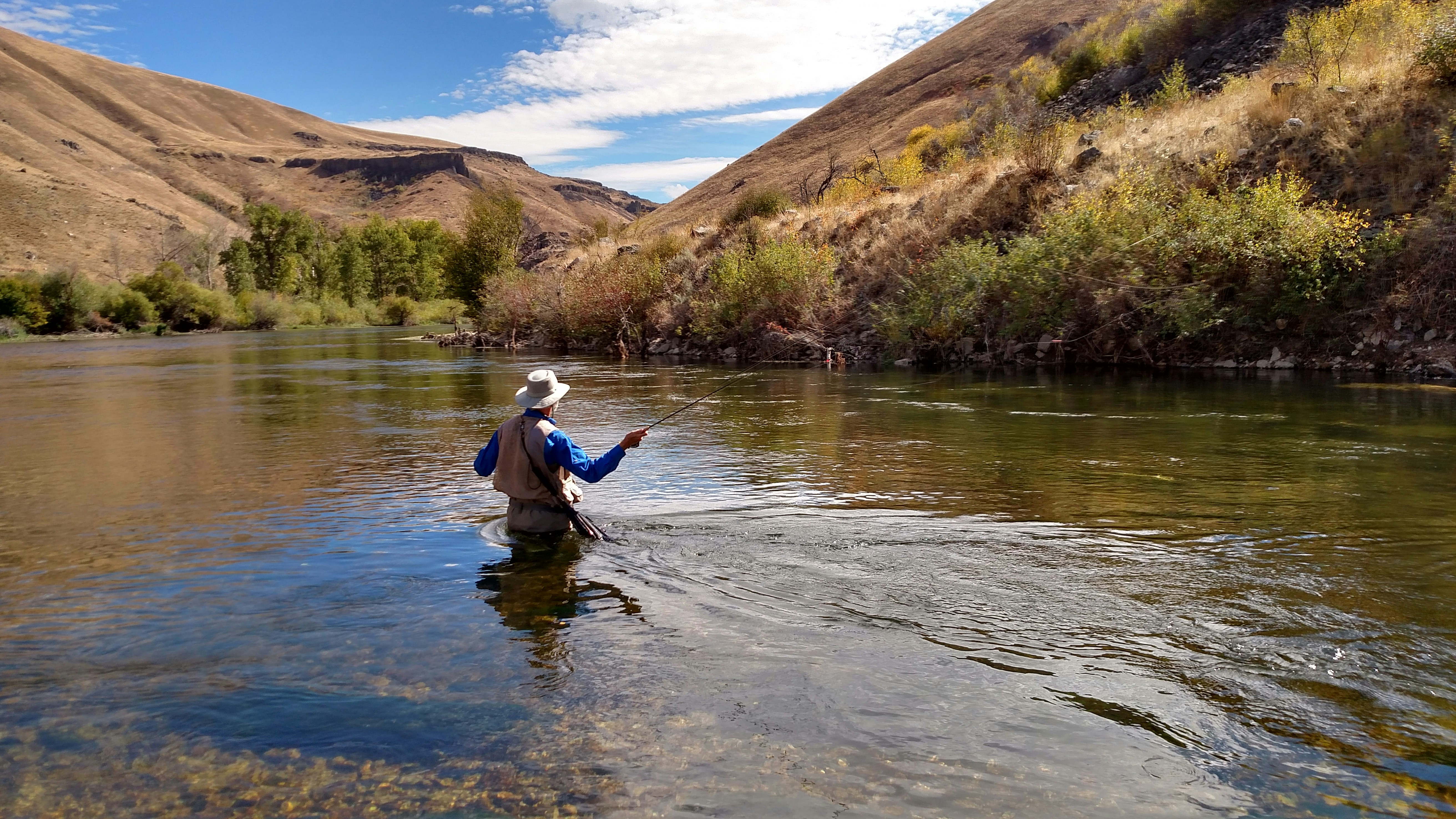
Fly Fishing Techniques: The Complete Guide (2026)
Estimated read time: 14 minutes
Knowing how to cast is just the start. The real depth of fly fishing lies in technique — understanding not just how to present a fly, but when, where, and why each approach works. The angler who can switch fluidly between dry fly, nymphing, and streamer tactics based on what the water is telling them will consistently outfish someone with better gear and a single approach.
This guide covers the full toolkit: surface, subsurface, and streamer techniques for rivers and stillwater, plus an introduction to saltwater fly fishing. If you're brand new to fly fishing, start with our Fly Fishing 101 beginner's guide first — this guide assumes you've got the basics covered and are ready to go deeper.
Table of Contents
- How to Choose the Right Technique
- Dry Fly Fishing
- Nymphing Techniques
- Streamer Fishing
- Wet Fly and Soft Hackle Fishing
- Stillwater Techniques
- Saltwater Fly Fishing Techniques
- Line Management and Mending
- Presentation Fundamentals
- Frequently Asked Questions
How to Choose the Right Technique
The single most useful skill in fly fishing isn't casting distance or fly identification — it's reading a situation and matching your technique to what fish are actually doing. Here's a simple framework:
Are fish visibly rising? → Start with dry fly. Observe rise forms to identify what they're eating before casting.
No surface activity but conditions look good? → Default to nymphing. Trout feed subsurface 80–90% of the time regardless of whether a hatch is visible.
High, cold, or coloured water? → Streamer fishing. Visibility is low, fish are less selective, and a large fly with movement is easier to find.
Stillwater with no obvious activity? → Retrieve a streamer or nymph along drop-offs and structure. Early morning and evening near inlet streams are prime.
Saltwater — fish tailing or cruising visible? → Sight fishing with a well-placed cast ahead of the fish. Timing and accuracy matter more than fly selection.
Most successful fly anglers cycle through these decisions constantly during a session, switching techniques as conditions change. Staying locked into one approach regardless of what the water is telling you is one of the most common reasons anglers struggle.
Dry Fly Fishing
Dry fly fishing is fly fishing in its most visual, most satisfying form. You're presenting a floating fly to a fish you can often see, watching the take in real time, and striking on instinct. Nothing else in the sport quite matches it.
The Drag-Free Drift
The central challenge of dry fly fishing is presenting your fly so it drifts naturally on the surface, carried only by the current — exactly as a real insect would behave. Any unnatural movement caused by current pulling on your fly line is called drag, and trout almost always refuse a dragging fly.
Managing drag requires:
- Accurate casting — placing the fly so that as little line as possible crosses conflicting currents between you and the fish
- Line mending — repositioning the fly line on the water after the cast to neutralise current differentials
- Reach casts and curve casts — advanced presentations that build slack or angle into the cast to buy more drag-free drift
The Upstream Presentation
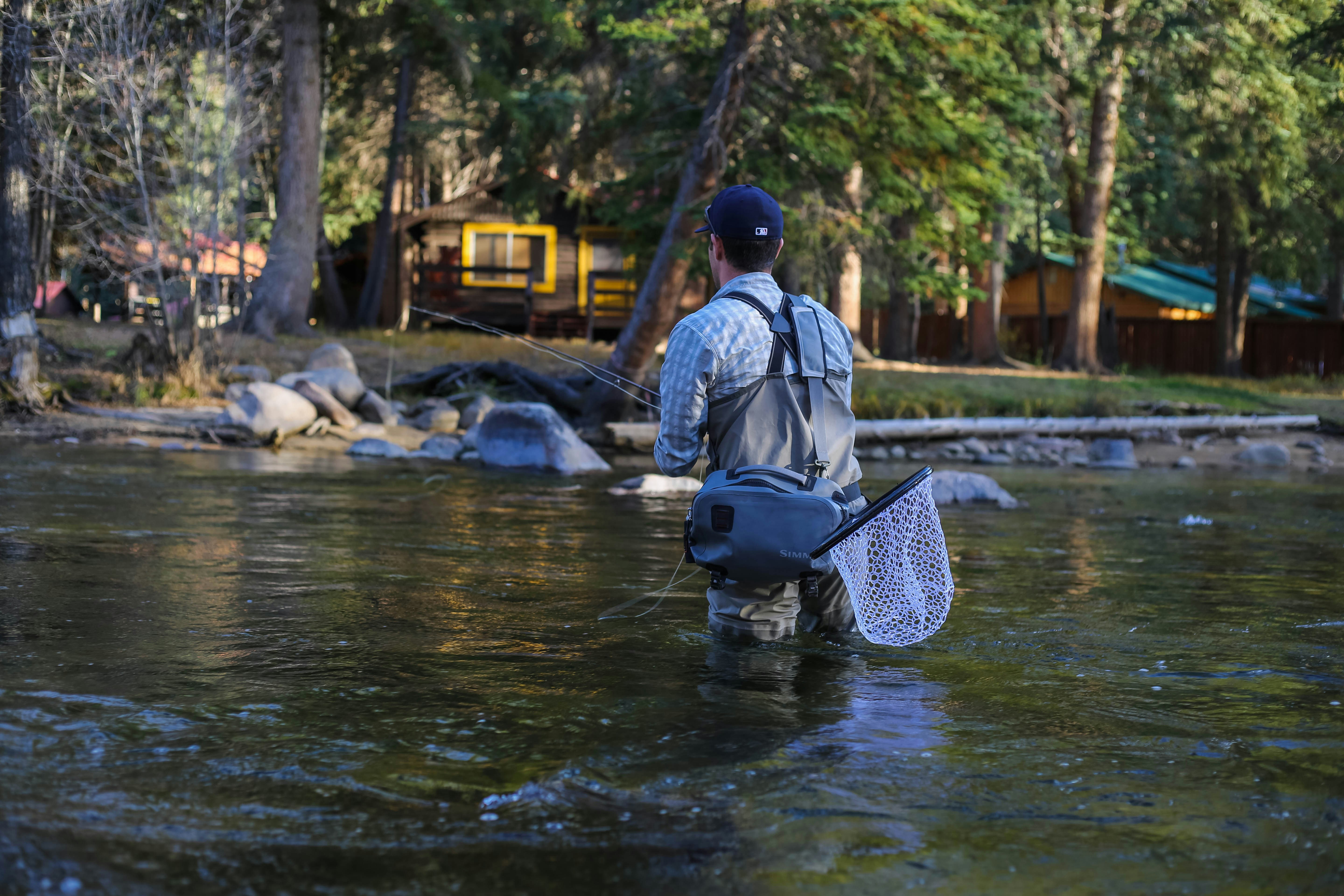
The standard dry fly approach in moving water: position yourself downstream of the fish, cast upstream and slightly across, then follow the drift with your rod tip as the fly comes back toward you. This approach keeps you behind the fish's field of vision and allows a natural downstream drift.
Strike tip: resist the instinct to strike the instant you see a rise. Let the fish turn down with the fly — a slight pause before lifting gives the hook time to find purchase. This takes practice and self-discipline.
The Downstream Presentation
Sometimes the upstream cast isn't possible — heavy vegetation behind you, fish feeding in a position that requires a downstream approach, or current that makes an upstream drift impossible. The downstream presentation involves casting above the fish and feeding slack line to extend the drift. Harder to execute, but a valuable tool when the upstream approach won't work.
Reading Rise Forms
Rise forms tell you what trout are eating before you've selected a fly:
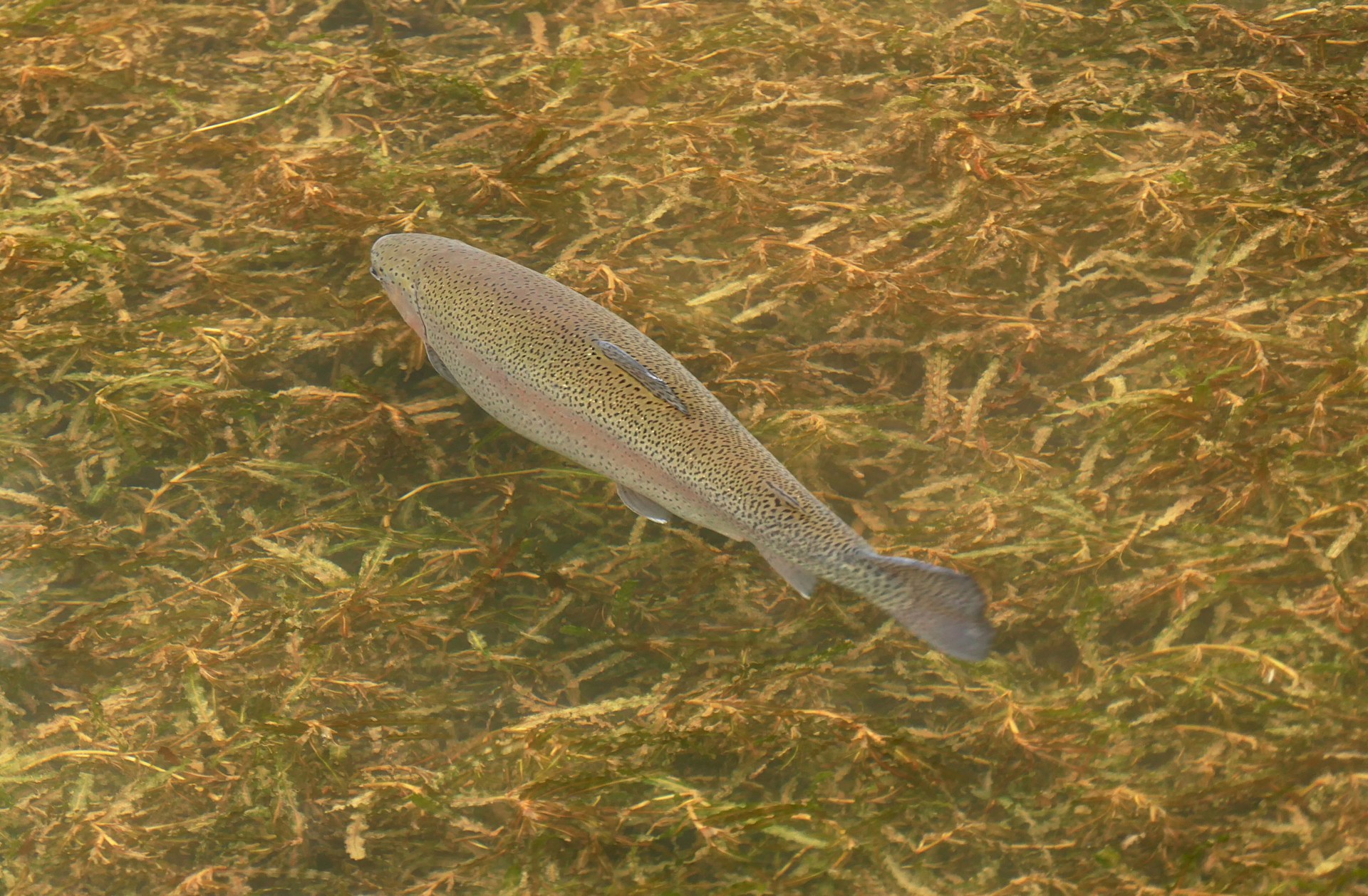
- Sipping, barely-visible rings — feeding on tiny emergers or spinners in the film. Fine tippet (6X–7X), small flies, precise placement.
- Head-and-tail rise — nose, dorsal, and tail break the surface in sequence. Classic mayfly dun rise. Match the hatch carefully.
- Splashy, aggressive rise — chasing caddis or other active insects. Fish are less selective; a dragged or twitched fly can actually work better here.
- Bulging without breaking the surface — taking nymphs just below the film. Switch to an emerger pattern rather than a fully floating dry.
Key Dry Fly Patterns
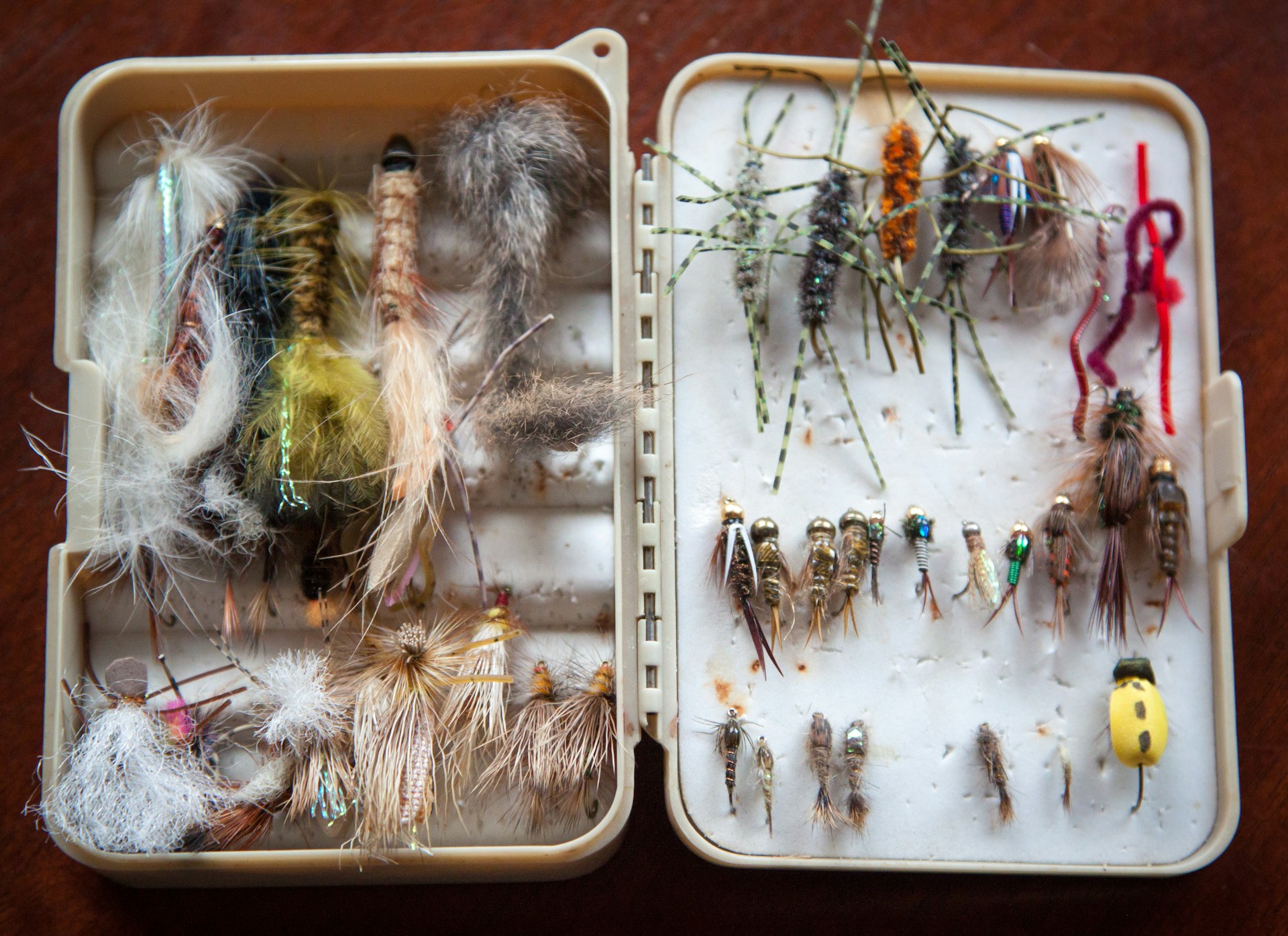
- Parachute Adams — the universal attractor, imitates a wide range of mayflies (size 12–18)
- Elk Hair Caddis — buoyant, visible, excellent in rough water (size 12–16)
- Griffith's Gnat — midge cluster imitation for spring creeks and tailwaters (size 18–22)
- Pale Morning Dun — essential for PMD hatches (size 16–18)
- Hopper patterns — foam grasshoppers for summer bank fishing (size 8–12)
→ Deep dive: Mastering Dry Fly Fishing: A Beginner's Guide
Nymphing Techniques
Nymphing is the most consistently productive technique in freshwater fly fishing. Since trout feed subsurface the vast majority of the time, being able to present a nymph naturally at the right depth is a foundational skill. It lacks the visual drama of dry fly fishing, but it catches fish when nothing else will.
Indicator Nymphing
The most accessible nymphing method. A strike indicator (a small float attached to the leader) suspends your nymph at a set depth and signals takes. Set the indicator at roughly 1.5 times the water depth — enough to keep the fly near the bottom where fish are feeding.
Key principles:
- Weight your fly or add split shot to get it down quickly — a nymph that drifts through the upper water column without reaching feeding depth catches few fish
- Watch the indicator constantly; strikes are often subtle — a slight pause, a twitch, or the indicator moving against the current
- Strike immediately and firmly at any anomalous movement; you'll have false alarms, but hesitation costs fish
Euro Nymphing (Tight Line Nymphing)
Euro nymphing — encompassing Czech, Polish, and French nymphing styles — is a more advanced technique that uses heavier, often tungsten-beaded flies, a long (10–11ft) rod, and no indicator. Instead of watching a float, you maintain a tight, direct connection between your rod tip and your flies, detecting takes through feel and the movement of a short section of coloured tippet called a sighter.
Why it works: the tight line connection is far more sensitive than an indicator, allowing detection of subtle takes that would never move a float. The technique also gets flies down to the bottom faster and keeps them in the strike zone longer.
When to use it: fast, pocket water and runs where indicator nymphing is difficult; wherever a more direct, controlled presentation is needed.
The learning curve is steeper than indicator nymphing, but the rewards are significant — many competition fly anglers consider it the most effective single technique in river fly fishing.
Dry-Dropper Fishing
A hybrid technique: a buoyant dry fly (often a large attractor like a hopper or Wulff) is fished on the surface with a nymph suspended below it on a short length of tippet. The dry fly acts as a visible indicator while also presenting a potential surface meal. Two chances to catch a fish on every cast.
The dry-dropper is particularly effective in the pocket water of freestone streams, where opportunistic fish will take either component. It's less useful on pressured spring creeks where selectivity is high.
Key Nymph Patterns
- Hare's Ear — the universal nymph, imitates a wide range of invertebrates (size 12–16)
- Pheasant Tail — slim mayfly nymph imitation (size 14–18)
- Zebra Midge — essential for tailwaters and stillwater (size 18–22)
- Copper John — heavy, fast-sinking attractor nymph (size 12–16)
- San Juan Worm — highly effective after rain (size 12–14)
→ Deep dive: Mastering Nymphing: A Beginner's Guide to Effective Subsurface Fly Fishing
🎣 Know which techniques work on your water. Logging fly selection, technique, water conditions, and results across your sessions reveals patterns that are invisible in the moment. Does nymphing always outperform dry fly before 9am on your home river? Do streamers only produce in the first hour after a cold front? Flyloops turns your session data into insight — start logging for free.
Streamer Fishing
Streamers imitate baitfish, leeches, crayfish, and other large prey items. They're retrieved actively rather than drifted, targeting predatory instinct rather than selective feeding behaviour. Streamer fishing is less technical than dry fly or nymphing — but it consistently produces the largest fish.
The Classic Swing
The foundational streamer presentation in moving water: cast across and slightly downstream, then allow the current to swing the fly across the river in a wide arc as you hold the rod tip up and follow the swing. Add short strips during the swing to vary the action. Takes often come at the end of the swing as the fly hangs momentarily in the current directly below you — hold on.
Strip Retrieve
Cast across or slightly upstream, then retrieve with strips of the line hand — short and fast, long and slow, or irregular. The variety of possible retrieves is part of what makes streamer fishing interesting. Experiment until you find what triggers fish on a given day.
A common mistake is retrieving too fast. A slow, pulsing strip that lets the fly breathe and sink between strips often outperforms a constant fast retrieve, particularly in cold water when fish are lethargic.
Dead Drift Streamers
An underused technique — presenting a streamer with a dead drift like a nymph, with no active retrieve. Works exceptionally well with articulated patterns and wooly buggers in slow, deep pools where a wounded or dying baitfish would sink and pulse naturally. Often takes the biggest, wariest fish.
When to Fish Streamers
- Autumn — brown trout are aggressive ahead of the spawn; big fish make mistakes they wouldn't make at other times of year
- High or coloured water — visibility is reduced and fish are less selective; a large, moving fly is easier to find
- Early morning and low light — large browns are predominantly nocturnal feeders; dawn and dusk are prime
- Cold water — when temperatures are low and nymphing is slow, a large streamer stripped slowly can provoke reaction strikes from torpid fish
Key Streamer Patterns
- Woolly Bugger (black, olive, white) — the universal streamer (size 4–10)
- Muddler Minnow — sculpin imitation, excellent for large browns (size 4–8)
- Clouser Minnow — dumbbell eyes give a jigging action, highly effective in stillwater (size 4–8)
- Articulated streamers — multi-section flies with exaggerated movement; the go-to for trophy fish hunting
→ Deep dive: Unleash the Power of Streamers: A Beginner's Guide
Wet Fly and Soft Hackle Fishing
Wet fly fishing predates dry fly fishing by centuries and remains devastatingly effective. Soft hackle flies — sparsely tied patterns with a collar of partridge, hen, or starling feather — imitate emerging insects at their most vulnerable moment, rising through the water column toward the surface.
The Leisenring Lift
A classic wet fly technique named after American fly tyer James Leisenring. Cast across and slightly upstream, allowing the fly to sink on a slack line. As the fly approaches a known fish lie, raise the rod tip to lift the fly upward through the water column, imitating an ascending nymph. Takes come as the fly rises — often violent.
Soft Hackle Swing
Cast across and downstream, then swing the fly across the current on a tight line, just as with a streamer. The soft hackle feather pulses with the current, imitating legs and gills of an emerging insect. Simple, effective, and often forgotten by anglers focused on dry fly or nymphing.
Wet fly fishing is particularly effective during — and just after — a hatch, when large numbers of nymphs and emergers are in the water column.
Stillwater Techniques
Still water demands a different mindset. Without current to carry food to them, fish in lakes and dams cruise actively, covering ground in search of prey. You need to move the fly to them — or intercept their patrol routes.
Retrieving Streamers and Lures
The most versatile stillwater approach. Cast toward structure — drop-offs, weed beds, inlet streams, dam walls — and retrieve with varying strip lengths and speeds. A slow figure-of-eight retrieve (constantly gathering small loops of line in the retrieving hand) is particularly effective with smaller patterns.
Key locations:
- Drop-offs from shallow to deep water — trout patrol these edges
- Inlet streams — oxygenated, food-rich water attracts fish
- Windward shores — wind pushes surface food to these banks
- Weed bed edges — shelter and invertebrate habitat
Indicator Nymphing in Stillwater
Suspend a nymph or buzzer (midge pupa) under a strike indicator at a depth just above the bottom or just below the thermocline. Cast out and wait, with occasional small twitches to impart movement. This is the standard approach on many European reservoir fisheries and is highly effective when fish are feeding subsurface on midges and chironomids.
Dry Fly on Stillwater
When fish are rising in stillwater, match the hatch as you would in a river, but without current to help your presentation. Cast slightly ahead of a cruising fish's direction of travel — not directly at it — and wait for it to reach your fly. Casting at a rising fish typically puts it down.
Fishing from a Boat
Drifting broadside to the wind and covering water systematically with a team of wet flies on a long leader is the traditional loch-style approach used across Scottish, Irish, and New Zealand fisheries. The flies are worked through the surface film as the boat drifts, with the top dropper deliberately dibbled in the surface. Highly effective and a distinct skill set in its own right.
Saltwater Fly Fishing Techniques
Saltwater fly fishing is demanding, physical, and intensely rewarding. Wind, distance, powerful fish, and unforgiving tides require a higher level of casting skill and situational awareness than most freshwater fishing — but the payoff is extraordinary.
Sight Fishing
The defining discipline of saltwater fly fishing. You spot fish — tailing bonefish on a flat, cruising GT in the surf, permit feeding over a coral head — and cast to intercept them. The variables are different from river fishing: you're often casting into wind, at moving targets, at distance, with very little time to react.
The key principles of saltwater sight fishing:
- Lead the fish — cast well ahead of the fish's direction of travel, not at it. How far ahead depends on species, depth, and speed; your guide will direct you.
- Strip immediately — unlike dry fly fishing, start your retrieve the moment the fly lands to get it moving as the fish approaches
- Strip strike, don't lift — in saltwater, striking by lifting the rod often pulls the fly away from the fish without hooking it. Strip the line hard with your line hand while keeping the rod low.
- Don't false cast over fish — false cast to the side to work out line, then deliver the final cast to the fish. Casting over fish repeatedly puts them down.
Blind Casting
When fish aren't visible, cover likely water systematically — along gutters and channels, over reef edges, through washes and white water. Vary retrieve speed and direction. Blind casting in saltwater is less efficient than sight fishing but covers more water and can produce in low-visibility conditions.
Key Saltwater Species and Approaches
Bonefish — the classic saltwater fly target. Found on shallow tropical flats, tailing and rooting for crustaceans. Small crab and shrimp patterns (size 4–8) presented quietly ahead of tailing fish. Requires precise, quiet presentation — bonefish spook easily in shallow water.
Giant Trevally (GT) — one of fly fishing's most powerful targets. Aggressive predators that crash baitfish in surf and on reef edges. Large, fast-stripped flies (size 1/0–4/0) and heavy gear (10–12 weight). Requires quick, accurate casting and an immediate strip strike.
Permit — considered the holy grail of saltwater fly fishing. Notoriously difficult to fool, highly selective, and present on the same flats as bonefish. Small crab patterns, perfect presentation, and a lot of patience.
Garrick / Leervis (southern Africa) — a spectacular inshore saltwater target, aggressive on surface flies and streamers in the surf zone. Accessible from the beach or rock on the right tide.
Tarpon — the silver king. Leaping, acrobatic fish that can exceed 100lbs. Requires 10–12 weight gear, large flies, and a perfectly executed strip strike before the tarpon's hard mouth closes on the hook.
Saltwater Gear Considerations
Saltwater demands heavier, more corrosion-resistant gear than freshwater. An 8–10 weight rod handles most inshore saltwater species. Reels must have sealed drag systems — saltwater will destroy an unsealed freshwater reel quickly. Rinse all gear thoroughly with fresh water after every saltwater session.
Line Management and Mending
Good line management separates consistently successful anglers from frustrated ones. The mechanics of casting get most of the attention, but what you do with the line after it lands matters just as much.
The Basic Mend
Immediately after the fly lands, pick up the fly line with a semicircular roll of the rod tip and reposition it upstream of the fly. This slows the line's downstream progress relative to the fly, buying drag-free drift. The mend should move the line without moving the fly — keep it gentle and controlled.
The Reach Cast
Rather than mending after the cast, the reach cast builds a mend into the delivery. As the fly line unrolls forward, reach the rod tip upstream before the line lands. The line falls with an upstream angle already built in, giving immediate drag-free drift without any post-cast disturbance. Particularly effective in technical, selective fish situations where any surface disturbance might spook fish.
Stack Mending
For long drifts across complex currents, a series of upstream mends — stacking line upstream progressively as the fly drifts — extends the drag-free zone significantly. Requires practice but becomes instinctive with time on the water.
→ Deep dive: Master the Mend: Fly Line Techniques for Effortless Presentations
Presentation Fundamentals
Technique is only effective if the fly arrives at the fish looking right. Presentation — how you deliver the fly and control its behaviour on or in the water — underpins everything.
Accuracy
Place your fly where it needs to go, not close to where it needs to go. A dry fly that lands 50cm from a feeding trout will rarely be taken; one that lands 10cm upstream in the feeding lane will. Accuracy improves through deliberate practice — casting to a specific target (a leaf, a pebble) on the lawn or in slow water builds the muscle memory needed on the day.
Tippet Length and Weight
Tippet diameter affects how naturally the fly behaves. Too heavy and the fly is unnaturally stiff; too light and you lose control and risk breaking off fish. In clear, slow water, err on the lighter side. In fast, broken water where drag is less visible, slightly heavier tippet is fine and gives you better control of large flies.
Tippet length also matters. A longer tippet (4–5ft) gives the fly more freedom to behave naturally; a shorter tippet gives more control but can transmit drag from the leader more easily. Start with 3–4ft of tippet for most situations.
Stealth and Approach
How you arrive at the water is as important as what you do once you're there. Trout — particularly in clear, low water — are acutely aware of shadows, vibrations, and movement above the waterline.
- Approach from downstream where possible
- Wade slowly and deliberately, minimising vibration
- Stay low in clear, shallow water
- Use bankside vegetation as cover
- Work the close water first before wading through it to reach the far bank
The angler who approaches carefully and fishes the close water thoroughly will consistently outfish the one who wades straight to the middle of the pool.
🎣 Build your technique library over time. The best way to improve across multiple techniques is to log what you tried, what conditions you were fishing, and what worked. Over a season, patterns emerge that no guide article can tell you — because they're specific to your water, your region, and your style of fishing. Track your sessions on Flyloops →
Frequently Asked Questions
What is the most effective fly fishing technique? It depends entirely on conditions. Nymphing is the most consistently productive technique in rivers because trout feed subsurface the majority of the time. But dry fly fishing during a hatch, or streamers in high water or autumn, can dramatically outperform nymphing. The most effective technique is the one that matches what fish are actually doing — which is why reading conditions matters more than mastering a single method.
What is Euro nymphing and is it worth learning? Euro nymphing is a tight-line nymphing technique that replaces the strike indicator with a direct, sensitive connection to the fly. It's more effective than indicator nymphing in many river situations, particularly in fast pocket water. It has a learning curve but is worth investing in — many experienced river anglers consider it the highest-percentage freshwater technique.
When should I use a streamer vs a nymph? Default to nymphing in normal conditions when fish are feeding actively. Switch to streamers in high or coloured water, in cold water when fish are lethargic, in low light conditions (dawn, dusk, overcast), and in autumn when large brown trout are aggressive. Streamers also work well when you want to cover water quickly to locate fish rather than working one spot carefully.
What is a dry-dropper and when should I use it? A dry-dropper is a hybrid rig combining a buoyant dry fly on the surface with a nymph suspended below it. The dry fly acts as a visible indicator for the nymph while also presenting a potential surface meal. It's most effective in the broken pocket water of freestone streams where opportunistic fish will take either component. Less useful on selective spring creeks.
How do I stop my dry fly from dragging? Drag is caused by current differentials between your fly line and fly. Fix it by: casting more accurately to reduce the amount of line crossing different currents; mending the line upstream immediately after the cast; using a reach cast to build a mend into the delivery; positioning yourself closer to the fish to shorten the drift; or switching to a downstream presentation with a slack line.
Is saltwater fly fishing much harder than freshwater? Yes, in most respects. Wind, distance, moving targets, strip striking, and the speed of events make saltwater fly fishing more demanding. Casting ability needs to be solid before attempting sight fishing on flats — a cast that takes five seconds to execute in a still freshwater pond won't cut it when a bonefish is 15 metres away and moving fast. That said, some saltwater fishing (blind casting from a beach, estuary bass) is very accessible to intermediate fly anglers.
What line do I need for streamer fishing? A standard weight-forward floating line handles most streamer situations in rivers. For fishing streamers deeper in fast water or stillwater, a sink-tip line (floating line with a sinking front section) or an intermediate line gives better depth control. For serious streamer fishing for big fish, purpose-built streamer lines with aggressive tapers help turn over large, wind-resistant flies.
What's the best technique for beginners to learn first? Indicator nymphing. It's the most consistently productive technique, the most forgiving of imperfect casting, and it teaches you to read water depth, current, and fish holding lies — skills that transfer directly to every other technique. Once you're catching fish on nymphs, dry fly and streamer fishing make more sense and come faster.
Tracking which techniques work in which conditions on your water accelerates improvement faster than anything else. Log your sessions on Flyloops — free on web, iOS, and Android.