How to Choose Your First Fly Reel: A Beginner's Guide
Estimated read time: 10 minutes
The fly reel is the most misunderstood piece of equipment in fly fishing. Ask a beginner what to prioritise in their setup and most will focus on the rod — which makes sense, since the rod is what you cast with. The reel, by comparison, seems passive. It just holds the line, right?
Partly. For most freshwater trout fishing, that's essentially true — you'll rarely need to use the drag system and the reel's primary job is line storage. But as your fishing develops — larger fish, faster species, saltwater — the reel becomes genuinely critical. A reel with a failing drag costs you a fish. A reel that corrodes in saltwater costs you significantly more.
This guide covers everything you need to choose your first fly reel confidently: how reels work, what the key features mean in practice, what to spend, and specific recommendations at every budget level — for both freshwater and saltwater applications.
Table of Contents
- What a Fly Reel Actually Does
- Key Reel Features Explained
- Reel Sizing and Weight Matching
- Drag Systems
- Reel Construction and Materials
- Large Arbor vs Standard Arbor
- Freshwater vs Saltwater Reels
- How Much Should You Spend?
- Specific Reel Recommendations by Budget
- What to Avoid
- Frequently Asked Questions
What a Fly Reel Actually Does
A fly reel serves four functions, in rough order of importance:
1. Line storage. The reel holds your fly line, backing, and leader when they're not being fished. This is its most basic function and the one that matters most in everyday trout fishing.
2. Backing storage. Behind your fly line sits backing — typically 50–150m of thin braided line. If a large fish runs beyond the length of your fly line, it pulls backing off the reel. A reel with insufficient backing capacity loses large fish.
3. Drag. When a fish runs, the drag system applies resistance to the spool, tiring the fish and preventing it from running too fast and breaking the tippet. For small trout, you'll rarely engage the drag at all — you play fish by hand, stripping line in. For large trout, powerful yellowfish, bass, or any saltwater species, a smooth, reliable drag is essential.
4. Balance. A well-matched reel balances the rod when held at the grip, reducing fatigue during long casting sessions.
Understanding these four functions helps you make smart decisions about where to invest in a reel and where saving money is fine.
Key Reel Features Explained
Arbor
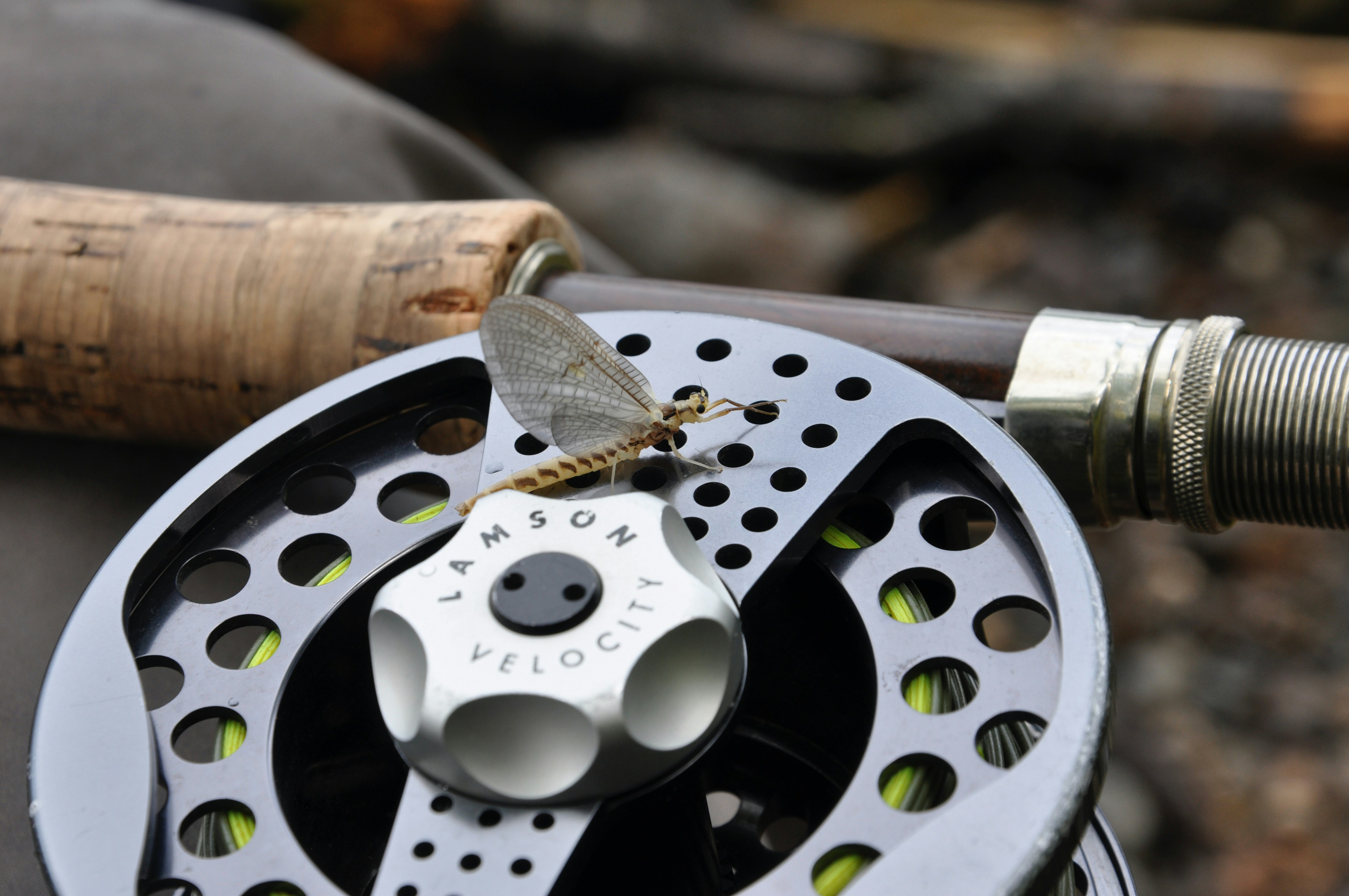
The arbor is the central hub of the spool — the cylinder around which the fly line wraps. Arbor size has two practical effects: line retrieval rate and drag consistency.
A larger arbor diameter means more line is retrieved per revolution of the handle — important when a fish runs toward you and you need to take up slack quickly. A larger arbor also maintains more consistent drag pressure as line leaves the spool, because the spool diameter doesn't change as dramatically as it does on a small arbor reel.
Spool
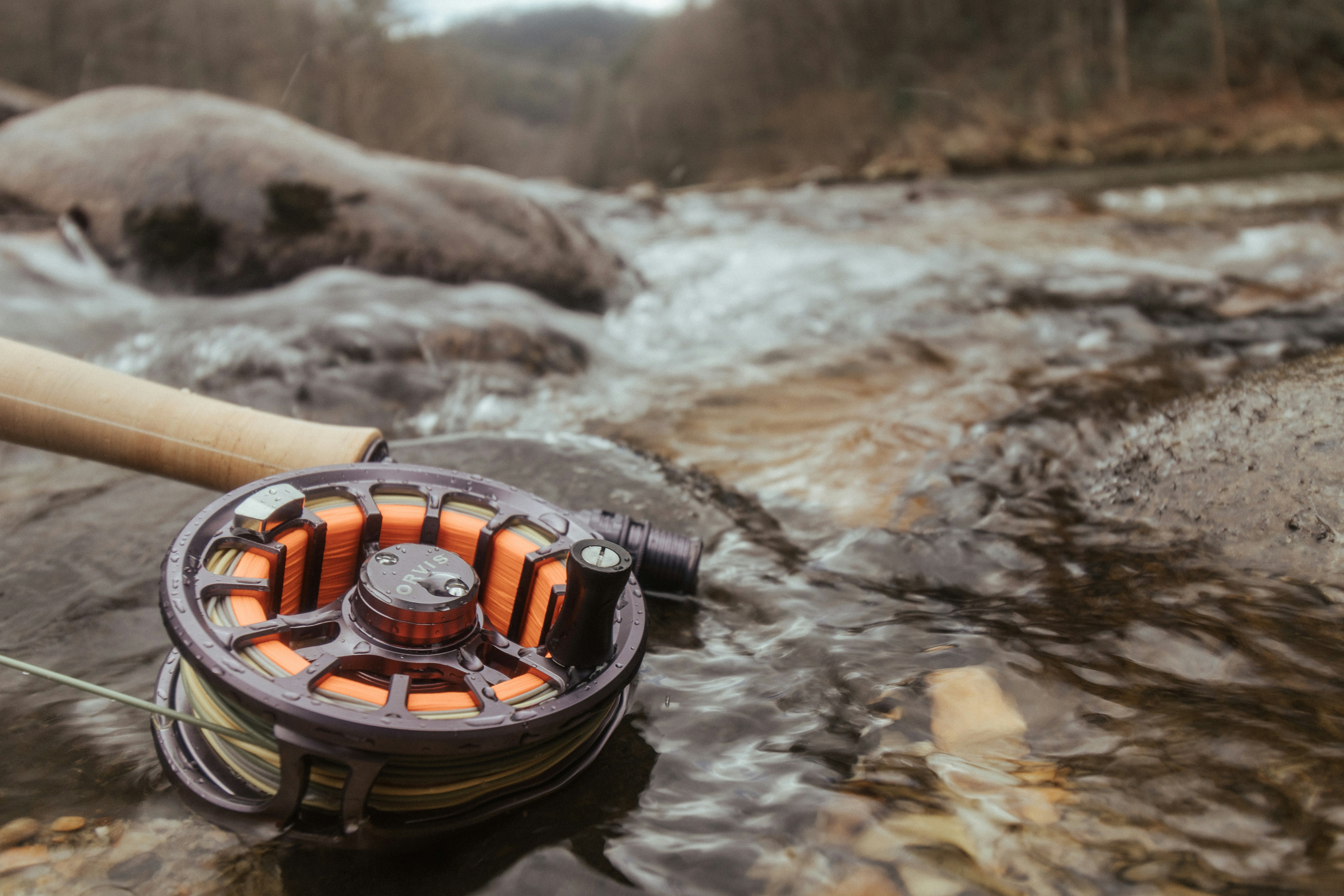
The spool is the removable section of the reel that holds the line. Most quality reels have interchangeable spools — you can swap between a floating line and an intermediate line by simply swapping spools rather than re-rigging entirely. This is a genuinely useful feature once your fishing develops beyond a single line.
Frame
The frame is the fixed body of the reel that houses the drag mechanism and accepts the spool. Frame rigidity matters — a cheap frame flexes under pressure, which affects drag performance and can cause the spool to rub against the frame.
Handle
The handle is what you wind to retrieve line. Most reels have a single folding handle. Handle size and shape affects comfort, particularly during extended retrieves. Personal preference plays a role here — cast a few reels if possible to find what feels comfortable.
Drag Knob
The drag knob adjusts resistance on the spool. Most have a simple twist mechanism — clockwise to increase drag, anticlockwise to reduce. Set drag before fishing and adjust during a session as needed. A good drag knob turns smoothly with clear, tactile increments.
Reel Sizing and Weight Matching
Fly reels are sized to match rod and line weight. The convention is straightforward: a 5-weight rod takes a 5-weight reel, loaded with 5-weight line. Most reels are rated for a range — a reel rated 4/5/6 handles rods in that weight range comfortably.
Why Matching Weight Matters
Balance: a reel that's too heavy makes the setup tip-heavy toward the reel seat, fatiguing your casting arm. A reel that's too light makes the rod tip-heavy, affecting casting feel.
Line capacity: a reel rated for heavier lines has a larger arbor and more backing capacity, which is unnecessary for lighter applications and adds bulk.
Drag strength: heavier weight reels have stronger drag systems scaled to the larger, more powerful fish those rod weights are used for.
Standard Weight Pairings
| Rod Weight | Typical Use | Reel Rating |
|---|---|---|
| 3–4 weight | Small streams, panfish | 3/4 or 4/5 |
| 5–6 weight | General freshwater, trout, yellowfish | 5/6 or 4/5/6 |
| 7–8 weight | Bass, larger species, light saltwater | 7/8 or 6/7/8 |
| 9–10 weight | Saltwater inshore, salmon | 9/10 |
| 11–12 weight | GT, tarpon, heavy saltwater | 11/12 |
Drag Systems
The drag system is where reel quality most directly affects fishing performance. Understanding the two main types helps you make an informed choice.
Click-and-Pawl Drag
The original fly reel drag system — a simple spring-loaded pawl that clicks against teeth on the spool as it rotates. Produces the classic ticking sound of a running fish.
Advantages: simple, reliable, easy to maintain, lightweight. Provides a light, consistent resistance that works well for small to medium trout.
Disadvantages: limited drag range — you can't apply much stopping power. Not suitable for large, powerful fish that need to be slowed significantly. Insufficient for saltwater.
Best for: trout fishing with small to medium fish, small streams, classic fishing aesthetic.
Disc Drag
A modern drag system using friction discs — similar in principle to disc brakes on a bicycle — to apply adjustable resistance to the spool. The industry standard for most modern fly reels.
Advantages: smooth, consistent drag across a wide range. Highly adjustable from very light to very strong. Handles powerful fish that make long runs. Essential for saltwater.
Disadvantages: more complex than click-and-pawl — more components that can fail. Generally heavier.
Best for: most fishing situations, particularly larger fish and any saltwater application.
What "Smooth" Means in Practice
When experienced anglers talk about smooth drag, they mean a system with no start-up inertia — the drag engages immediately when the fish runs, without a spike of resistance at the beginning. Start-up inertia (a brief moment of excess resistance before the drag settles) is the most common cause of tippet breakage on a running fish. A truly smooth drag starts gently and applies consistent resistance throughout the run.
Smoothness is hard to judge from specifications — it's felt in the hand. If possible, test a reel's drag by pulling line off the spool with your hand before buying.
Reel Construction and Materials
Cast Aluminium
Aluminium is poured into a mould and cooled. Produces a functional reel at lower cost. Adequate for most freshwater applications. Less precise tolerances than machined aluminium, which can affect drag performance and spool fit over time.
Machined Aluminium (Bar-Stock)
Aluminium is machined from a solid bar using CNC equipment. Produces precise tolerances, better fit between spool and frame, and a noticeably higher quality feel. More expensive than cast aluminium but the standard for mid-range and above reels. The right choice for serious freshwater fishing and any saltwater use.
Carbon Fibre
Used in some high-end reels for reduced weight. Extremely light but requires careful handling — carbon is strong under compression but can crack under impact. A niche material for specific applications.
Anodising
Most aluminium reels are anodised — an electrochemical process that hardens the surface and adds colour. Hard anodising (Type III) produces a more durable surface than standard anodising and is worth looking for in any reel you plan to use in saltwater or rough conditions.
Large Arbor vs Standard Arbor
Modern fly reels are almost universally large arbor — a wide-diameter spool that replaced the narrow standard arbor design of earlier reels. The advantages are real and worth understanding.
Large Arbor Advantages
Faster line retrieval: the larger diameter means more line is picked up per handle revolution. Critical when a fish runs toward you and you need to eliminate slack quickly — a large arbor reel picks up slack 2–3x faster than an equivalent standard arbor reel.
More consistent drag: as line leaves a small arbor spool, the remaining coils have a smaller diameter, which changes the effective drag pressure. A large arbor spool changes diameter less dramatically, maintaining more consistent drag throughout a long run.
Reduced line memory: line stored in tight coils on a small spool develops more pronounced memory (the tendency to curl when cast) than line stored in larger coils on a large arbor spool.
Standard Arbor
Standard arbor reels are mostly found at the budget end of the market and in vintage or classic designs. Functional for trout fishing where drag rarely comes into play. For any application involving large fish or saltwater, large arbor is strongly preferable.
Recommendation: for a first reel, buy large arbor. The practical advantages are real and most modern reels at all price points are large arbor anyway.
Freshwater vs Saltwater Reels
This is the most important distinction in reel selection beyond budget — and it's non-negotiable.
Freshwater Reels
Freshwater reels can use open drag systems, unsealed bearings, and standard anodising without significant risk. Freshwater is relatively benign to aluminium and mechanical components. Most freshwater reels are not suitable for saltwater use — salt accelerates corrosion dramatically and will destroy unsealed components quickly.
Saltwater Reels
Saltwater reels require:
Sealed drag system: saltwater penetrating an unsealed drag system causes corrosion and drag failure. A fully sealed drag is non-negotiable for any saltwater application.
Corrosion-resistant materials: hard anodised aluminium, stainless steel components, and marine-grade sealants throughout. Standard aluminium without proper treatment corrodes rapidly in salt.
Higher drag strength: saltwater species are generally larger and more powerful than freshwater equivalents. GT, tarpon, and large bonefish require drag systems capable of applying significant stopping power.
Larger backing capacity: long-running saltwater fish require more backing than most freshwater species. A saltwater reel should hold 200m+ of 20–30lb backing.
Can You Use a Freshwater Reel in Saltwater?
Technically yes, but with significant consequences. Salt left on a freshwater reel will corrode the drag mechanism, bearings, and frame finish. If you do use a freshwater reel in saltwater, rinse it thoroughly with fresh water immediately after every session and dry it completely before storage. This extends life but doesn't eliminate the risk — a dedicated saltwater reel is always the better choice.
Rinsing After Saltwater Use
Regardless of reel type, rinse all saltwater gear — rod, reel, line — with fresh water after every session. Salt left to dry on any component accelerates corrosion. A 30-second rinse under a tap extends the life of your gear significantly.
How Much Should You Spend?
The reel is one area where spending more than strictly necessary is often worthwhile — a good reel outlasts multiple rods and significantly affects fishing performance with larger fish. That said, there's a sensible ceiling for most applications.
Under $60
Entry-level reels. Functional for light freshwater trout fishing where the drag is rarely used. Generally cast aluminium, basic drag systems, and limited backing capacity. Adequate for learning but not suitable for serious fishing with large fish or any saltwater use.
$60–$150
The sweet spot for most beginner and intermediate freshwater fishing. Machined aluminium construction, reliable disc drag, large arbor. Reels from Redington, Orvis, and similar brands at this price point will serve most trout and bass anglers well for years.
$150–$300
Premium freshwater reels and entry-level saltwater. Noticeably better drag smoothness, tighter tolerances, better anodising. Worth the investment if you fish regularly, target larger species, or want a reel that handles both freshwater and light saltwater applications.
$300–$600
Professional-grade freshwater and serious saltwater. Fully sealed drag systems, hard anodised frames, exceptional smoothness and reliability. The standard for dedicated saltwater fishing and anglers who want the best available freshwater performance.
Over $600
Top-end reels from Abel, Hatch, and similar makers. Lifetime warranty, extraordinary build quality, hand-assembled in some cases. A genuine investment rather than a purchase — these reels last decades. Not necessary for most anglers but the right choice for those who fish saltwater seriously and want equipment that simply never fails.
Specific Reel Recommendations by Budget
Best Budget Freshwater Reel: Redington Behemoth (~$60)
The most widely recommended budget fly reel available. Large arbor, reliable cork drag, fully machined aluminium frame. Performs significantly above its price point and is the first reel recommendation for most beginners. Available in sizes covering 3/4 through 9/10.
Best Mid-Range Freshwater Reel: Orvis Clearwater (~$100)
A step up in drag smoothness and overall quality from the Behemoth. Part of Orvis's excellent Clearwater lineup — if you buy the Clearwater rod and reel combo, this is included and represents excellent value. Handles trout through bass with ease.
Best Value All-Round Reel: Sage Spectrum C (~$150)
One of the best value reels in fly fishing. Carbon fibre drag washers, sealed drag housing, available in sizes covering 1/2 through 9/10. Works in both freshwater and light saltwater applications. Noticeably smoother than reels at half the price.
Best Entry Saltwater Reel: Ross Animas (~$200)
Machined aluminium, fully sealed drag, hard anodised finish. Handles inshore saltwater species comfortably — garrick, shad, bonefish, light GT work. A significant step up from unsealed freshwater reels for anyone venturing into saltwater.
Best Intermediate Saltwater Reel: Hatch Finatic (~$450)
The gold standard for serious saltwater fishing at a price that remains accessible. Aircraft-grade aluminium, exceptional sealed drag, available in sizes suitable for everything from trout to tarpon. A reel that will genuinely last a lifetime with basic care.
What to Avoid
Very cheap reels from unknown brands. A $20 reel from an unrecognised brand will have imprecise tolerances, a drag system that either locks up or provides no resistance, and frame materials that flex under any pressure. It will fail when you need it most. The Redington Behemoth at $60 is a better reel in every measurable way.
Using a freshwater reel in saltwater without rinsing. Salt corrosion is cumulative and largely invisible until the drag fails mid-fight. Rinse every time, or buy a dedicated saltwater reel.
Buying a reel that doesn't match your rod weight. A reel that's too heavy tips the balance of the setup and fatigues your casting arm. A reel that's too light looks wrong and may not hold enough backing for the fishing you're doing. Match the weight rating to your rod.
Ignoring backing capacity. Most beginners load a reel with fly line and forget about backing. For small stream trout this is fine. For anything that might run — yellowfish, bass, any saltwater species — backing matters. Check the reel's backing capacity at the appropriate line weight before buying.
Over-tightening the drag. Set your drag to break the tippet at approximately 25–30% of its rated breaking strength. Over-tightening causes tippet breaks on the strike or first run. Many fish are lost to over-tight drag, particularly with fine tippet.
🎣 Track what gear works for your fishing. As you build your setup and develop your fishing, logging sessions on Flyloops helps you connect gear choices to results — what worked, what didn't, and what to try next. Start your free logbook →
Frequently Asked Questions
Does the fly reel matter as much as the rod? For most freshwater trout fishing — no. The rod influences casting feel and presentation far more than the reel. For larger fish, powerful species, and any saltwater application, the reel matters significantly — a smooth, reliable drag and adequate backing capacity directly affect whether you land fish. Buy a quality reel from the start and you won't need to replace it as your fishing develops.
What size fly reel do I need? Match the reel size to your rod weight. A 5-weight rod takes a reel rated 4/5/6 or 5/6. Most manufacturers rate their reels for a range of line weights — check the specifications to ensure your rod weight falls within that range. See the sizing table earlier in this guide for specific pairings.
Should I buy a reel with a click-and-pawl or disc drag? Disc drag for almost everyone. Click-and-pawl is a charming, simple system that works for light trout fishing but has limited stopping power. Disc drag handles everything from small trout to large saltwater species. Unless you specifically want the classic aesthetic and sound of a click-and-pawl reel, disc drag is the practical choice.
What is large arbor and do I need it? Large arbor refers to the wide-diameter spool centre. It retrieves line faster, maintains more consistent drag pressure, and reduces line memory. Almost all modern fly reels are large arbor — it's the standard design. You almost certainly need it and will almost certainly be buying it without thinking about it.
Can I use one reel for both freshwater and saltwater? With caveats. A mid-range reel with a sealed drag (like the Sage Spectrum C) handles light saltwater applications adequately with thorough rinsing after every session. For serious saltwater fishing — GT, tarpon, heavy inshore — a dedicated saltwater reel with a fully sealed system and hard anodised construction is strongly preferable. The risk of corrosion and drag failure with a freshwater reel in regular saltwater use is real.
How important is the drag on a fly reel? For small trout fishing — not very. Most trout are played by hand-stripping line rather than using the reel drag. For fish over 1–2kg, powerful species, or any saltwater application — very important. A smooth drag that engages without a spike of start-up inertia prevents tippet breaks at the moment a large fish first runs. It's the single most important performance characteristic of any reel used for larger fish.
How do I set my drag correctly? A common rule: set the drag to approximately 25–30% of your tippet's breaking strength. For 5X tippet (approximately 2kg breaking strength), set the drag to break at around 500g of pull. Test it by pulling line off the spool with your hand — it should come off with steady resistance but not require significant force. Adjust during a session if fish are breaking off (too tight) or running uncontrolled (too loose).
How long should a fly reel last? A quality mid-range reel from a reputable brand, properly maintained, should last many years — often a decade or more. Premium reels from brands like Abel and Hatch come with lifetime warranties and are genuinely built to last a lifetime. The reel is arguably the piece of fly fishing gear with the best longevity-to-cost ratio. Buy quality once and maintain it properly.
Setting up your first fly fishing kit? See our Complete Fly Fishing Gear Guide for a full breakdown of everything you need — rod, reel, line, and beyond.