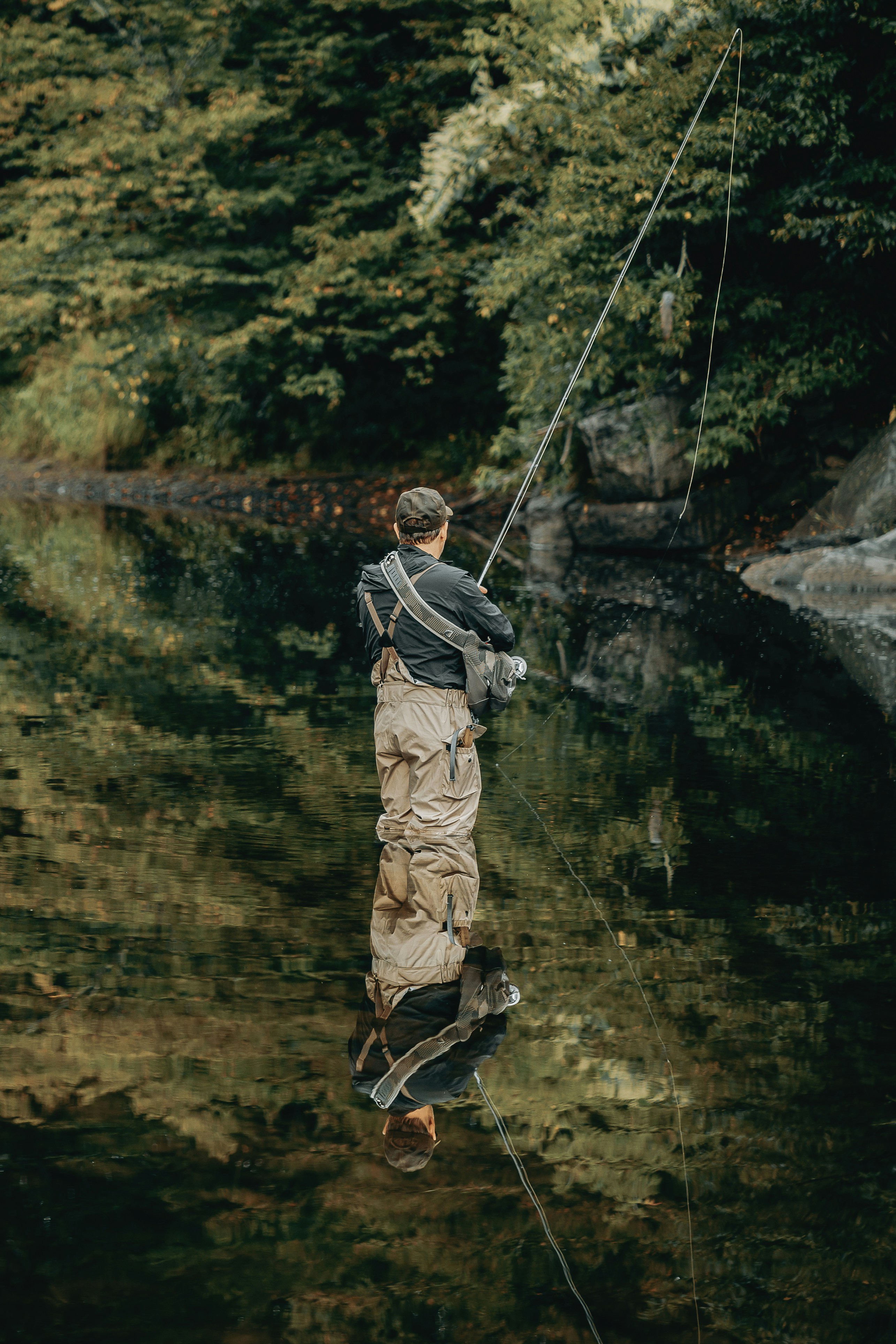
Fly Fishing Conditions and Strategy: The Complete Guide
Estimated read time: 13 minutes
Two anglers fish the same river on the same day. One catches fish consistently. The other struggles. Same water, same flies, similar technique. The difference? One of them understands conditions.
Fly fishing success is not just about casting ability or fly selection. It's about fishing at the right time, in the right place, with the right approach for the conditions on that specific day. An experienced angler who understands how weather, water temperature, barometric pressure, and time of day affect fish behaviour will consistently outfish a technically superior angler who ignores these variables.
This guide brings together everything you need to know about fly fishing conditions and strategy — how each major variable affects fish, how to read what conditions are telling you, and how to adjust your approach accordingly.
Table of Contents
- Why Conditions Matter
- Water Temperature
- Weather and Cloud Cover
- Barometric Pressure
- Wind
- Water Level and Clarity
- Time of Day
- Seasons
- Reading Multiple Variables Together
- Building a Conditions Strategy
- Frequently Asked Questions
Why Conditions Matter
Fish are cold-blooded. Their body temperature, metabolism, and activity level are directly controlled by their environment. Unlike warm-blooded predators that maintain a constant internal temperature regardless of conditions, fish are entirely at the mercy of the water around them.
This has a profound practical implication: fish behaviour is highly predictable if you understand the environmental variables driving it. A trout that is feeding actively today may be completely dormant tomorrow — not because anything changed about the fish, but because the barometer dropped, the water temperature rose two degrees, or a cold front pushed through overnight.
Understanding conditions doesn't guarantee fish. But it dramatically improves the quality of your decisions — when to fish, where to fish, what techniques to use, and when to recognise that the conditions are against you and adjust accordingly.
Water Temperature
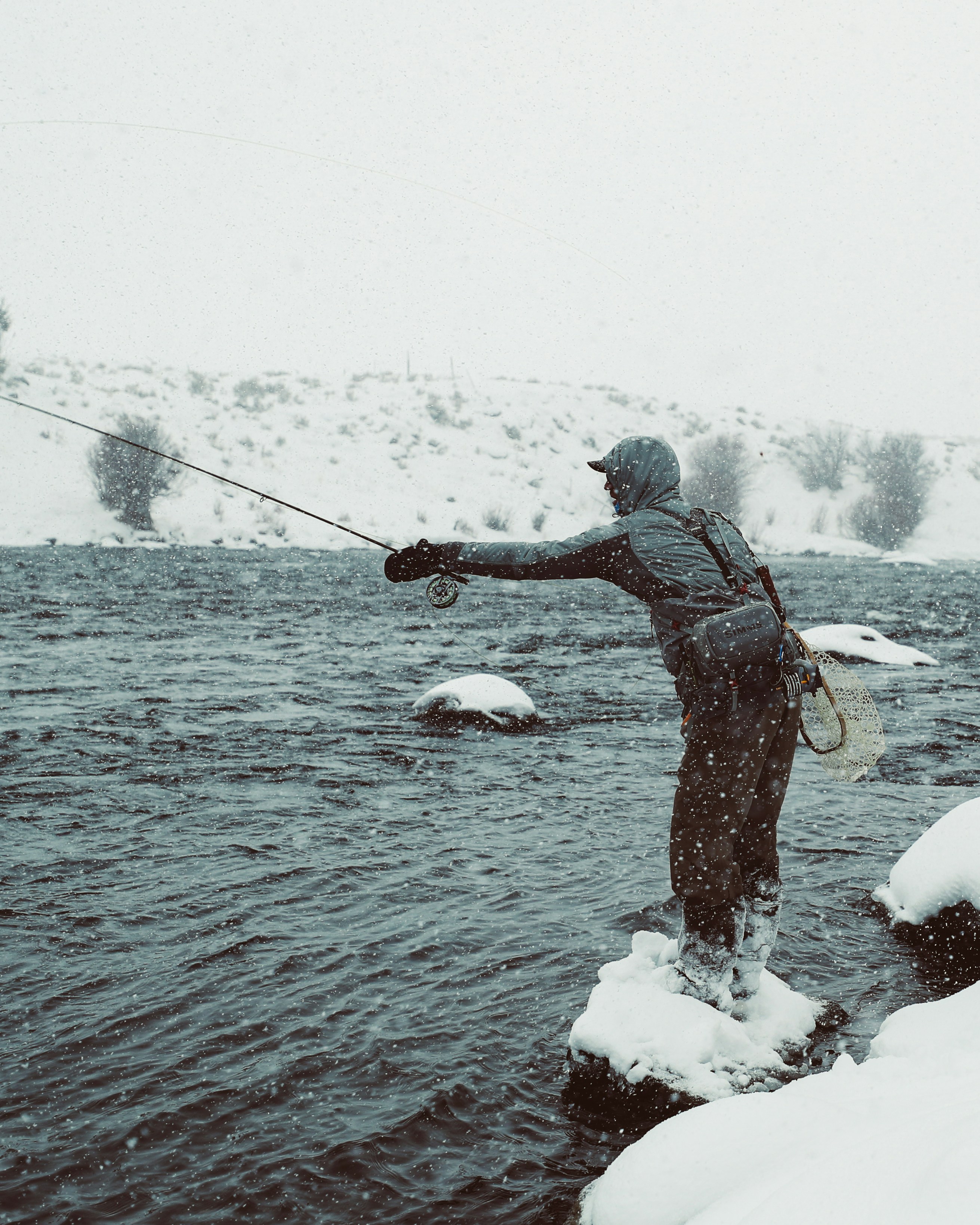
Water temperature is the single most important variable in freshwater fly fishing. It governs fish metabolism, feeding activity, holding position, and vulnerability to stress during catch-and-release. More than any other factor, it determines whether fish are catchable on a given day.
How Temperature Affects Fish
Fish metabolism is directly tied to water temperature. In cold water, metabolism slows — fish require less food, move less, and expend minimal energy. As temperature rises into the prime range, metabolism accelerates — fish need more food, feed more actively, and range more widely through the water column. Above the optimal range, fish experience heat stress and feeding shuts down again.
Temperature Ranges by Species
Trout (rainbow and brown):
| Temperature | Feeding Activity |
|---|---|
| Below 4°C (40°F) | Almost none — fish dormant in deep, slow water |
| 4–10°C (40–50°F) | Slow but increasing — deep nymphing most effective |
| 10–16°C (50–61°F) | Prime feeding range — all techniques productive |
| 16–18°C (61–65°F) | Active but seeking shade and cool water |
| Above 18°C (65°F) | Heat stressed — consider not fishing |
Yellowfish:
| Temperature | Feeding Activity |
|---|---|
| Below 12°C (54°F) | Minimal — fish largely inactive |
| 12–16°C (54–61°F) | Increasing — deep nymphing most effective |
| 16–24°C (61–75°F) | Prime feeding range |
| Above 26°C (79°F) | Heat stress — reduced activity |
Bass:
| Temperature | Feeding Activity |
|---|---|
| Below 10°C (50°F) | Very slow — deep water, minimal feeding |
| 10–15°C (50–60°F) | Increasing activity |
| 15–22°C (60–72°F) | Prime feeding range |
| Above 28°C (82°F) | Heat stress — reduced activity |
Practical Temperature Strategy
Carry a stream thermometer. It takes ten seconds to check and is the single most useful piece of information you can have before deciding where and how to fish. A $15 thermometer pays back immediately.
In cold water: fish slowly and deeply. Heavy tungsten nymphs drifted near the bottom. Slow streamer retrieves. Target the deepest, slowest available water.
In prime temperature range: fish with confidence at all depths. All techniques are productive. Focus on matching technique to visible fish behaviour rather than adjusting for temperature.
In warm water: fish early morning and evening. Target riffles and inlet streams where oxygenation is highest. Consider whether fishing is ethical — playing a heat-stressed trout can kill it even with perfect catch-and-release technique.
→ Deep dive: Mastering Trout Behavior: How Water Temperature Affects Your Fly Fishing Success
Weather and Cloud Cover
Weather affects fly fishing through multiple channels simultaneously — light levels, insect activity, fish wariness, and feeding patterns all respond to changing weather conditions.
Cloud Cover
Cloud cover is one of the most immediately useful weather observations for fly fishing. Overcast conditions consistently produce better dry fly fishing than bright sunshine — and the reason is straightforward.
In bright sunlight, fish in shallow water are exposed to predators from above. They seek shade, deeper water, and cover. They're warier of anything approaching from above — including flies landing on the surface. Insect hatches are also suppressed in bright conditions on many rivers.
Under overcast skies, light levels are reduced, fish feel less exposed, and they move more freely into feeding positions. Many of the most important mayfly hatches — Blue Winged Olives in particular — hatch almost exclusively on overcast, drizzly days. On many rivers, an overcast day with light rain produces better dry fly fishing than three sunny days combined.
Practical strategy:
- Overcast days: fish dry fly and surface techniques with confidence throughout the day
- Sunny days: focus on early morning and evening; nymph during midday; target shaded lies and deeper water
Rain
Light, steady rain: generally positive. Insect activity often increases. Fish are less wary under broken surface conditions. Terrestrial insects wash into the river. Some of the best dry fly fishing of the year happens during and after light rain.
Heavy rain: negative in the short term — coloured, rising water puts fish off the feed and makes presentation difficult. However, the period immediately after a flood drops and clears can be extraordinarily productive as fish feed aggressively on the food washed in by high water.
Post-flood: when a flooded river drops and begins to clear — typically 24–48 hours after peak flow — can be the best fishing of the season. Fish are hungry, food is abundant, and the slightly coloured water reduces their wariness. San Juan Worms and large nymphs fished near the bank edges where food has accumulated are highly effective.
Wind
Wind is the fly angler's most immediate practical challenge — it affects casting, presentation, and the angler's ability to control the fly. But wind also creates opportunities:
On stillwater: wind creates surface disturbance that concentrates food on the windward shore and reduces fish wariness. Fishing the windward bank on a windy day often produces the best stillwater results of the session.
On rivers: upstream wind makes casting harder but downstream wind helps turn over the leader. Crosswinds require casting adjustments — angle the cast to work with the wind rather than against it.
Practical casting strategies in wind:
- Cast with the wind at your back where possible
- Use tighter loops to cut through headwind
- Lower your casting plane for crosswinds
- Shorten your leader in strong wind for better turnover
→ Deep dive: Mastering Fly Fishing: How to Read the Weather for Success
Barometric Pressure
Barometric pressure — the weight of the atmosphere — is one of the most discussed and least understood variables in fly fishing. The research on its effects is incomplete, but the consistent experience of anglers worldwide points to clear patterns worth understanding.
How Pressure Affects Fish
Fish have a swim bladder — an air-filled organ that controls buoyancy. Changes in atmospheric pressure affect the pressure that water exerts on the swim bladder, and fish adjust their depth to maintain neutral buoyancy. This adjustment process is thought to be uncomfortable or disorienting, suppressing feeding behaviour.
Falling pressure (the approach of a weather system) often triggers a feeding frenzy before it drops. Fish sense the change and feed aggressively — particularly in the hours before a storm front arrives. Some of the best fishing of the year happens in the window just before a major weather change.
Low pressure (during a storm or depression) typically produces poor fishing. Fish are under pressure adjustment stress and largely stop feeding.
Rising pressure (after a cold front) often produces the worst fishing. Fish are recovering from the pressure change and may not resume normal feeding patterns for 24–48 hours after pressure begins to rise.
Stable pressure — high or low — produces consistent, predictable fishing. Stable high pressure is generally better than stable low pressure, but stability itself is more important than the absolute reading.
Practical Pressure Strategy
- Check the barometer before planning a fishing trip — a stable reading for 24+ hours is a better indicator of good fishing than the absolute pressure level
- If pressure is falling, get on the water immediately — the pre-front feeding window can be exceptional
- After a cold front passes and pressure rises sharply, wait 24–48 hours before fishing if possible
- Don't cancel a trip because of a low reading — fish still eat in low pressure, just less actively
→ Deep dive: The Barometric Pressure Puzzle: How Weather Affects Fly Fishing Success
Wind
Wind deserves its own section beyond its role in weather patterns — it's the variable that most directly affects the practical act of fly fishing on any given day.
Wind Direction and Fishing Position
Wind direction determines where food accumulates in stillwater and affects current patterns in rivers. Understanding wind direction improves both your positioning and your results.
Stillwater: food — surface insects, zooplankton, terrestrials blown onto the water — accumulates on the windward shore. Fish follow the food. On a north wind, fish the north bank. This is one of the most reliable rules in stillwater fly fishing.
Rivers: strong upstream wind creates surface tension that slows hatching insects, extending their time on the water and concentrating feeding fish. Downstream wind speeds emergence and can compress the hatch into a shorter, more intense period.
Casting in Wind
Wind is a casting challenge that every fly angler faces. A few principles that help:
Use the wind: cast on the downwind side of your body to prevent the fly swinging into you. On a right-to-left wind, cast with a backhand presentation or switch to your left hand if you can.
Tighten your loop: a tight, efficient loop cuts through wind far better than a wide, open loop. Focus on a crisp stop on both the forward and back cast.
Shorten your cast: in strong wind, accept that you'll cast shorter distances and fish closer water more thoroughly. A 10-metre cast delivered accurately is worth more than a 20-metre cast that lands in a heap.
Use heavier flies: wind-resistant flies (poppers, large dry flies, bushy streamers) require more power to turn over. In wind, switching to a slightly heavier, less wind-resistant fly often produces better results than fighting to turn over a large pattern.
Water Level and Clarity
Water level and clarity change how fish behave and where they hold — adjusting your approach to current conditions is one of the most important in-session skills.
High Water
Rising or high water after rain changes everything. The main current becomes too fast for fish to hold in comfortably. Fish move out of their normal lies and seek slower water near banks, in flooded margins, behind large boulders, and in backwaters.
High water strategy:
- Fish the edges — bank margins, flooded grass, and slower water adjacent to the main flow
- Use larger, darker flies that create a stronger silhouette in coloured water
- Streamer fishing becomes more effective as fish respond to movement and vibration
- Nymph close to the bank where fish have moved to shelter from the main current
Low Water
Low, clear conditions are the most technically demanding. Fish are concentrated in the deepest available water, highly visible to predators, and acutely aware of anything approaching from above. They inspect flies carefully and refuse anything that doesn't look right.
Low water strategy:
- Approach is critical — move slowly, stay low, use bankside cover
- Fine tippet (6X or 7X for trout) — fish can see everything
- Smaller flies — size down one or two from your normal starting point
- Fish early morning and late evening when light is lower
- Target the deepest available lies — pool bodies, undercut banks, deep runs
Water Clarity
Crystal clear: maximum fish wariness. Fine tippet, careful approach, precise presentation. Subsurface flies may outperform surface presentations as fish are reluctant to break cover.
Slightly coloured: often the best fishing conditions. Fish are less wary, your approach is less critical, and flies are more visible to fish from a distance. A touch of colour in the water is frequently a positive sign.
Heavily coloured: significantly reduces visibility for both angler and fish. Larger flies, darker colours, and techniques that rely on movement and vibration (streamers) outperform precise imitations.
Time of Day
Time of day is one of the most consistent and reliable predictors of fly fishing success. Fish are not randomly active throughout the day — they follow patterns driven by light, temperature, and insect activity.
The Daily Pattern
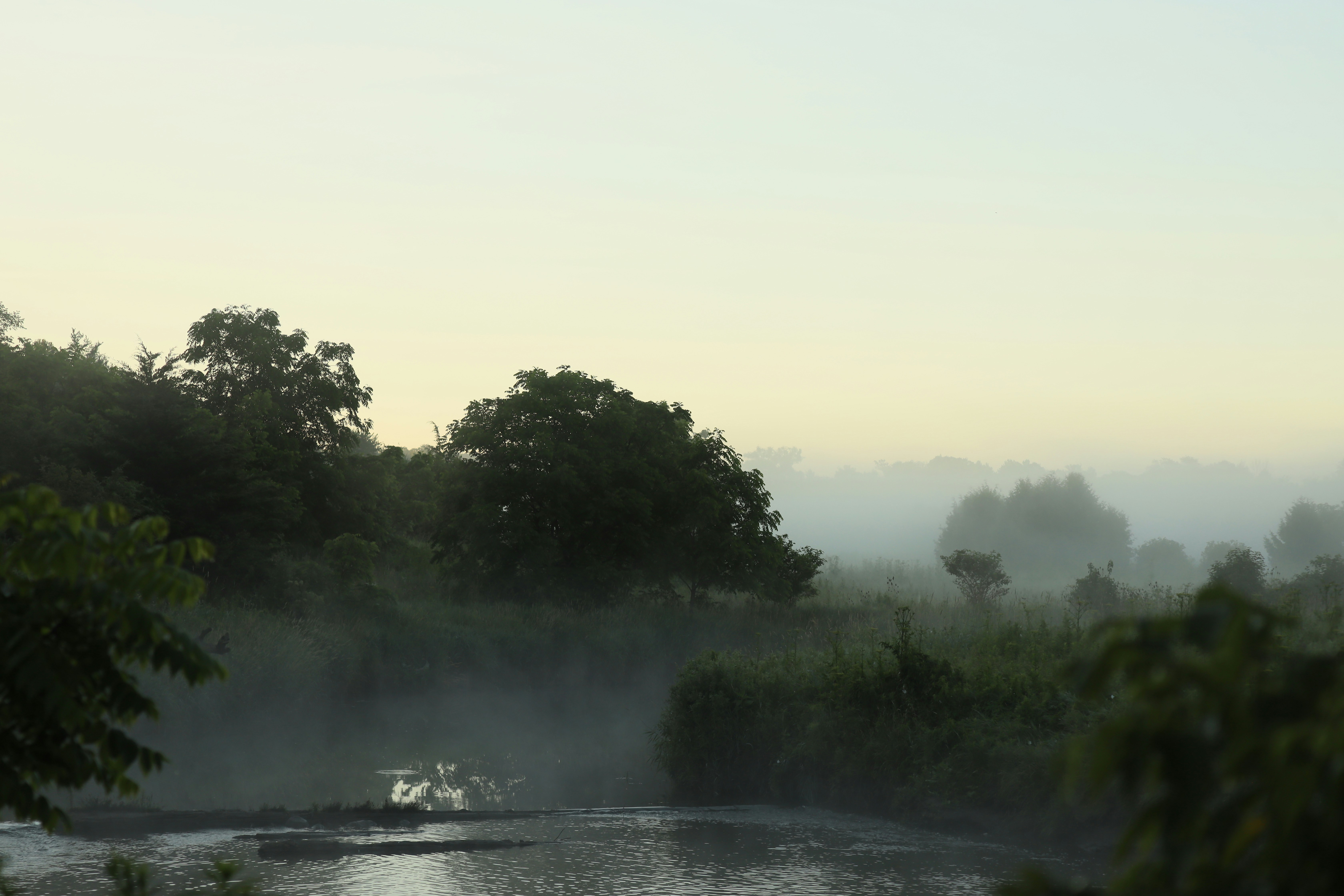
Dawn (first light to two hours after sunrise): consistently the most productive dry fly period of the day in summer. Light is low, temperatures are cool, fish are moving from overnight holding positions to feeding lies. Surface activity is often at its peak. If you can only fish one period on a summer day, fish this one.
Morning (two hours after sunrise to midday): productive on overcast days and during hatch periods. On bright days, activity begins to slow as light increases and temperatures rise.
Midday: generally the slowest period, particularly in summer and in warm-water species. Fish retreat to shade, deeper water, and cover. Nymphing deep structure is the most productive approach if you must fish midday.
Afternoon: begins to improve as temperatures start to drop. Watch for hatch activity — many important hatches occur in the afternoon, particularly on overcast days.
Evening (two hours before sunset to last light): the second major feeding window. Surface activity often peaks again as light fades. The evening rise — rising fish working across a pool tail in the last light — is one of fly fishing's iconic experiences.
Night: large predatory fish — big brown trout, largemouth bass, large kob in estuaries — move and feed actively after dark. Not for everyone, but night fishing with large surface flies or streamers produces the biggest fish of the year in some fisheries.
Seasonal Adjustments
Time-of-day patterns shift with the seasons:
Summer: concentrate on dawn and evening — midday heat suppresses activity Spring and autumn: fish can be active throughout the day as temperatures are moderate Winter: afternoon is often the best period as temperatures peak for the day
→ Deep dive: The Best Times to Fly Fish: Maximize Your Freshwater and Saltwater Success
Seasons
Each season presents a distinct set of conditions, challenges, and opportunities. Understanding the seasonal rhythm of your home water is one of the most valuable things you can develop as a fly angler.
Spring
Conditions: rising water temperatures, variable flows from snowmelt or spring rains, first hatches of the year emerging.
Opportunities: the first major feeding activity after winter. Nymphing in slightly coloured water can be excellent as fish feed aggressively. Blue Winged Olive hatches often begin in early spring on overcast days. Bass move onto spawning flats.
Challenges: unpredictable flows, variable temperatures, fish recovering from winter lethargy.
Key tactics: nymphing in riffles and runs; watch for BWO hatches on grey afternoons; streamer fishing in slightly higher water.
Summer
Conditions: warm water temperatures, lower flows in many systems, abundant insect activity, terrestrials active.
Opportunities: the best dry fly fishing of the year — hoppers, beetles, ants, caddis, evening mayfly hatches. Surface activity peaks in low light.
Challenges: midday heat suppresses activity; warm water stresses fish; crowded popular rivers.
Key tactics: dawn and evening dry fly fishing; terrestrial patterns near banks; nymphing in shade during midday; fish early and get off the water before the heat peaks.
Autumn
Conditions: cooling temperatures, lower flows often clearing after summer, increased terrestrial activity, pre-spawn aggression in brown trout.
Opportunities: arguably the best all-round season. Water temperatures drop back into prime range. Large brown trout become aggressive. Streamer fishing for big fish peaks. Bass feed aggressively before winter.
Challenges: shorter days compress the fishing window; some rivers begin closing for season.
Key tactics: large streamers for autumn browns; hopper-dropper rigs in early autumn; streamer fishing for bass; take advantage of stable conditions before winter sets in.
Winter
Conditions: cold water temperatures, lower fish activity, reduced insect diversity, midge fishing dominates.
Opportunities: uncrowded water, midge hatches can produce surprisingly good fishing on mild afternoons, big fish visible in clear water.
Challenges: cold water significantly reduces fish activity; catch-and-release stress is higher in cold water; some waters are closed for season.
Key tactics: small midges (size 18–22) fished slowly near the bottom; BWO hatches on mild afternoons; target the warmest water available (spring-fed sections, tailwaters); fish the warmest part of the day.
Reading Multiple Variables Together
The real skill in conditions strategy is combining multiple variables into a single assessment. No single variable tells the whole story — the picture emerges from reading them together.
Example 1 — Ideal conditions:
- Water temperature: 14°C (prime range)
- Barometric pressure: stable for 48 hours
- Weather: overcast, light wind
- Water level: normal, clear
- Time: late afternoon
Assessment: fish all techniques with confidence. Watch for afternoon hatch. Dry fly likely to produce. Excellent overall conditions.
Example 2 — Challenging conditions:
- Water temperature: 20°C (warm, heading toward stress)
- Barometric pressure: falling sharply
- Weather: storm front approaching, strong wind
- Water level: normal, clear
- Time: midday
Assessment: fish the pre-front feeding window immediately — falling pressure may trigger aggressive feeding before the storm arrives. Focus on early morning or evening given warm temperatures. Wind will make casting difficult — adjust fly selection and casting approach. Be off the water before the storm.
Example 3 — Poor conditions:
- Water temperature: 19°C (warm)
- Barometric pressure: rising sharply after cold front
- Weather: bright sun, cold wind
- Water level: normal, very clear
- Time: midday
Assessment: difficult fishing. Post-frontal high pressure suppresses feeding. Bright midday sun makes fish wary. Warm water reduces activity. Fine tippet, small flies, careful approach. Fish deep shade and structure. Nymph rather than dry fly. Consider returning tomorrow when pressure stabilises.
Building a Conditions Strategy
The most effective approach to conditions is systematic — building habits that gather information before and during every session.
Before the session:
- Check the weather forecast — temperature, cloud cover, wind, precipitation
- Check the barometer — is pressure rising, falling, or stable?
- Check river flow data if available — is the river rising, falling, or normal?
- Review your logbook — what were conditions like last time you fished well on this water?
At the water:
- Check water temperature immediately
- Observe water clarity and level
- Look for insect activity — any hatches visible?
- Watch the surface for rising fish before making a cast
During the session:
- Reassess as conditions change — a barometric drop during the session changes everything
- If fish stop feeding, ask why — what changed?
- Log conditions at the start and end of the session for future reference
🎣 Conditions data compounds over time. A single session's conditions tell you what happened that day. Ten sessions of logged conditions data on the same water reveals patterns — which pressure readings produce fish, what temperature triggers the best hatches, which wind direction makes stillwater fishing productive. Start logging on Flyloops →
Frequently Asked Questions
What is the most important condition for fly fishing success? Water temperature. It's the foundational variable that governs fish metabolism, feeding activity, and holding position. Everything else — weather, pressure, time of day — matters, but temperature sets the ceiling on what's possible on any given day.
Does weather really affect fly fishing? Yes, significantly. Cloud cover, barometric pressure, wind, and precipitation all affect fish behaviour in measurable ways. Understanding these effects doesn't guarantee fish, but it dramatically improves the quality of your decisions about when, where, and how to fish.
What is the best weather for fly fishing? Stable barometric pressure, overcast skies, mild temperatures, and light wind produces the most consistently good fly fishing. The approach of a weather system — falling pressure with increasing cloud — often triggers excellent pre-front feeding. Stable high pressure is generally better than stable low pressure but stability itself matters more than the reading.
Does barometric pressure really affect fishing? The scientific evidence is incomplete but the consistent anecdotal experience of millions of anglers worldwide points to real effects. The most reliable patterns: falling pressure triggers feeding before a front; sharply rising pressure after a cold front suppresses feeding for 24–48 hours; stable pressure produces predictable, consistent fishing regardless of absolute level.
What time of day is best for fly fishing? Dawn and evening are consistently the most productive periods across most species and seasons. Dawn offers cool temperatures, low light, and peak surface activity in summer. Evening offers falling temperatures, the evening rise, and low light. Midday is generally the slowest period in warm conditions.
How does water clarity affect fly selection? In crystal clear water, use finer tippet, smaller flies, and more precise imitations — fish can see everything and inspect flies carefully. In coloured water, use larger flies, darker colours, and patterns that rely on movement and vibration — visibility is reduced and fish are less selective. Slightly coloured water is often ideal — fish are visible to your fly but less wary of your approach.
Should I fish in the rain? Light, steady rain is generally positive — fish are less wary, terrestrial insects wash in, and insect activity often increases. Heavy rain that colours the water suppresses fishing in the short term but the post-flood clearing period can produce exceptional fishing. Never fish in thunderstorms near water.
How do I use conditions information to plan a fishing trip? Check weather forecasts 3–5 days ahead. Look for windows of stable pressure following a settled period. Avoid planning trips immediately after cold fronts when pressure is rising sharply. Spring and autumn offer the most stable conditions windows. Check river flow data for your target water — a river that's dropping and clearing after a flood is often worth a trip even if the weather isn't perfect.
Conditions data is only useful if you record it. Log your sessions on Flyloops — track water temperature, weather, pressure, and catch data across every outing to build a personalised conditions guide to your home water.